ZURICH. Instruments built in Switzerland have been formally selected to fly on the next European-led lunar lander, securing the country's largest role in Moon exploration since the solar wind experiment carried by Apollo 11. The payload includes a laser spectrometer from the University of Bern and a radiation monitor developed with the Paul Scherrer Institute.
The selection concludes a two-year competition among instrument proposals from across Europe. The Swiss package will sit aboard a lander bound for the lunar south polar region, where permanently shadowed craters are believed to hold water ice that future crews could convert into drinking water and rocket propellant.
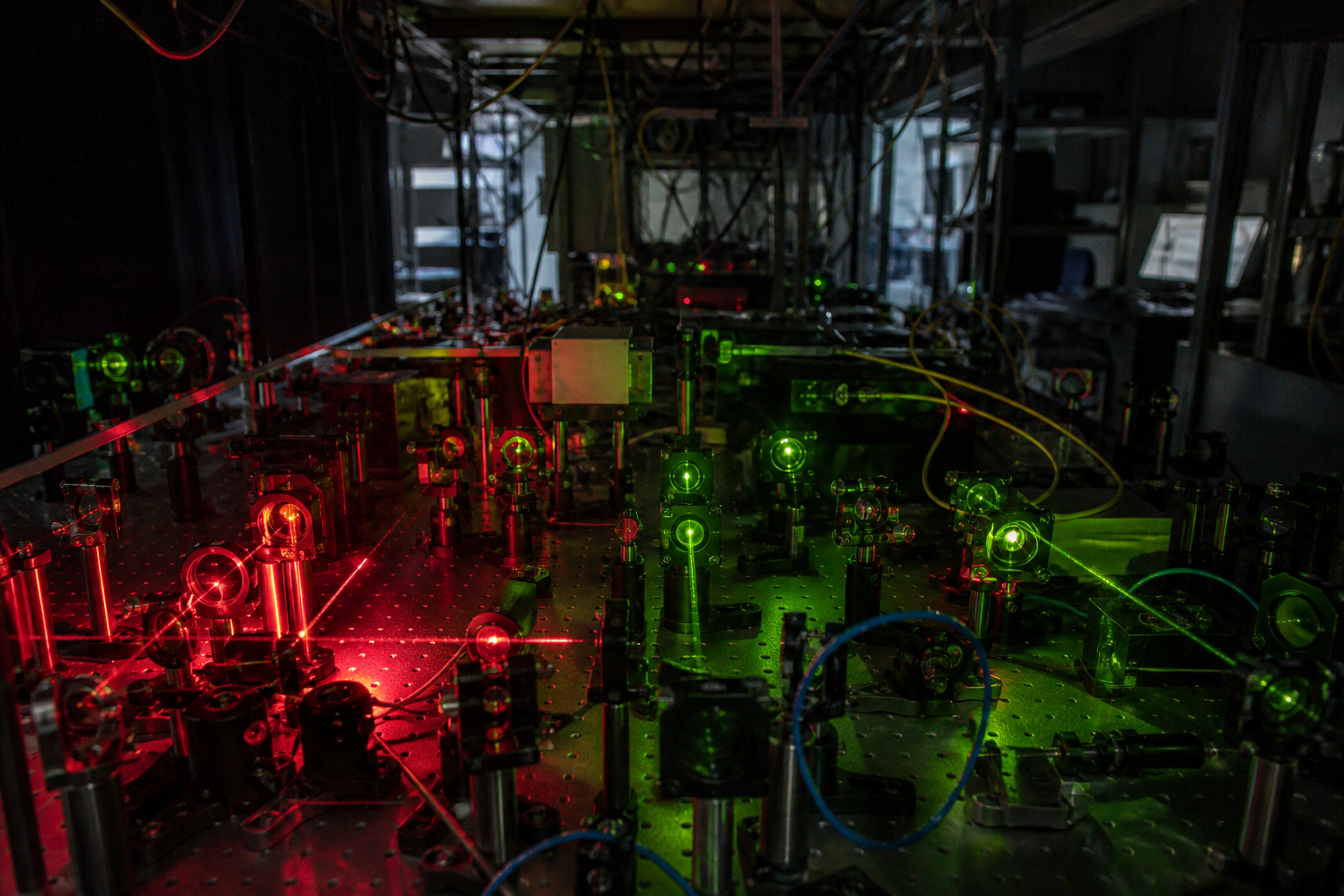
The Bern spectrometer works by firing brief laser pulses at grains of lunar soil lifted into a chamber, vaporising a microscopic sample and reading the masses of the resulting ions. The technique, known as laser ablation mass spectrometry, can identify water, metals and isotope ratios in a sample smaller than a grain of sand.
The selection carries a pleasing historical symmetry. When Apollo 11 landed in 1969, the first experiment its astronauts deployed was a solar wind collector built at the University of Bern, a simple foil sheet that trapped particles streaming from the Sun. The new instruments are a hundred times more complex, but they descend from the same laboratory and the same conviction that small countries can build decisive instruments.
The findings could reshape plans for a sustained human presence on the Moon. Whether polar ice exists in concentrations worth mining is the outstanding question of lunar economics, and the Swiss instrument is designed to answer it with direct chemical analysis rather than inference from orbit.
The hardware carries a strong Swiss pedigree. The University of Bern has supplied mass spectrometers to missions from Rosetta to BepiColombo, and the electronics for the new instrument were qualified for vacuum and vibration at facilities in Zurich. The radiation monitor, which will record the dose future astronauts would face, builds on detectors flown on the International Space Station.
The team acknowledges the risk bluntly. Landing near the south pole requires setting down on terrain that is both rough and dimly lit, and two commercial landers have failed in the attempt within the last three years. The instruments must also survive 14-day lunar nights at temperatures below minus 150 degrees Celsius, a qualification no component passes on paper alone. Every connector, battery and laser cavity will be cycled through that cold dozens of times before flight.
“Every gram has been argued over for two years, and now the real argument begins: surviving the night,” said the payload's project manager.
The path from clean room to crater runs through a punishing test campaign. Engineering models will be shaken, baked and frozen in vacuum chambers at ESTEC, the European Space Agency's technical centre in the Netherlands, before the flight model is delivered for integration with the lander.
Launch is targeted for late 2029 aboard a European rocket, with descent to the surface roughly five days later. First science data would arrive within hours of landing, since the spectrometer can analyse soil delivered by the lander's robotic arm almost immediately.
Switzerland's role in space science has long exceeded what its size would predict, sustained by the Swiss Space Office and a tradition of precision mechanics that transfers readily to spacecraft. This selection follows Swiss contributions to the Juice mission to Jupiter's moons and the CHEOPS exoplanet telescope.
Sixty years after a Bern-made solar wind sail was unfurled on the Sea of Tranquillity ahead of the American flag, Swiss instruments are returning to the lunar surface. This time they go not as passengers but as the reason for the journey.