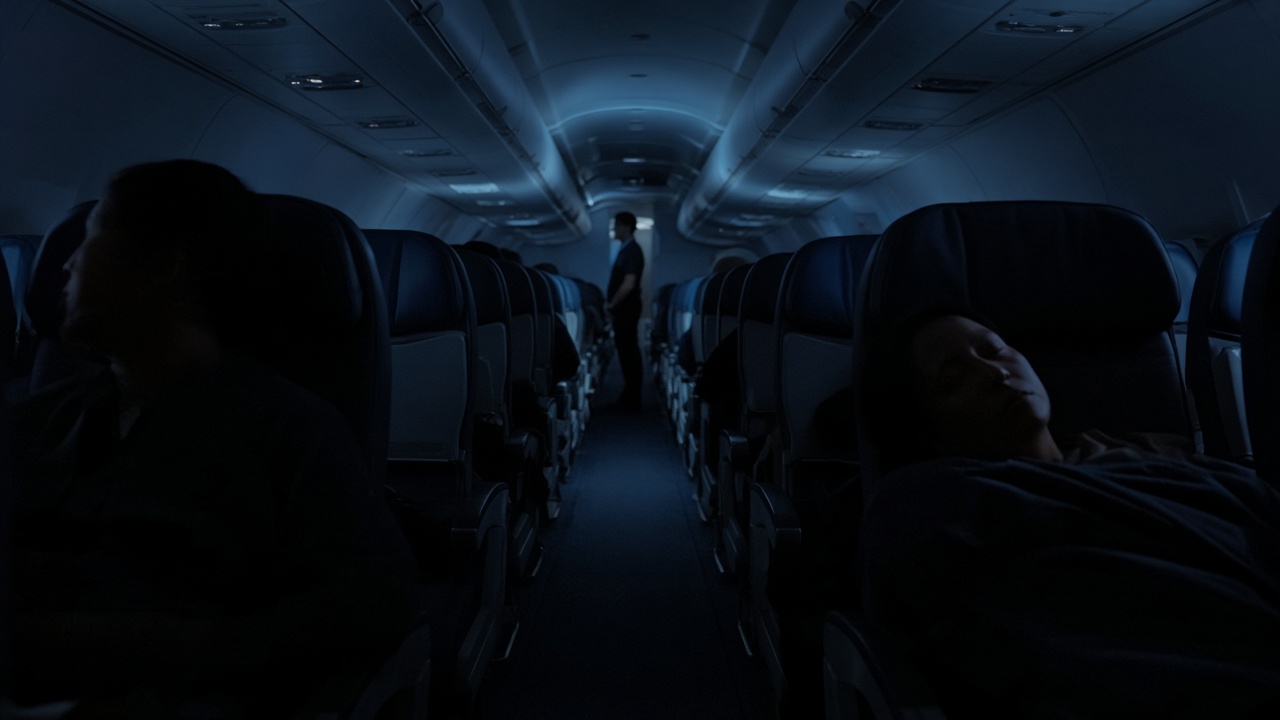
ZURICH. A passenger on a Swiss night flight from Toronto to Zurich has been fined CHF 3,000 and banned from the airline for three years after he was convicted of sexual harassment of the woman in the next seat. The Office of the Attorney General of the Confederation imposed the fine and CHF 5,000 in procedural costs. Swiss stopped him continuing his journey when the aircraft landed in Zurich, and has barred him from its flights for three years.
The flight was on 15 October 2025. The man, who is 68 and has been described in reports as a doctor, was in seat 33K. Shortly after midnight he repeatedly rubbed his foot against his neighbour’s leg. She leaned forward to get clear. The contact happened three times in about twenty minutes. He then moved closer and stroked her thigh with the back of his hand. She gathered her belongings and told the cabin crew. The crew’s report is what put the case with the federal prosecutor, which handles offences on Swiss aircraft.
Why the court’s penalty is a fine
Sexual harassment, in the form charged here, is a contravention in Swiss criminal law. A contravention is the lowest tier of offence. The punishment is a fine, not a prison sentence. That is why a case the airline treated as serious enough for an immediate travel ban ends, in the criminal file, at CHF 3,000 plus costs. The legal category is not a judgment that the conduct was trivial. It is the category parliament has written down. A passenger reading only the fine can miss that. A passenger reading only the headlines can miss the limit of what this charge can do.
The man has not been named. The conviction, reported on Tuesday by blue News and 20 Minuten, is a penal order of the federal prosecutor’s office. A penal order can be objected to. The reports do not say that one has been. What they do say is the operational outcome: he did not fly onward from Zurich, and Swiss will not carry him for three years.
What the airline says it can and cannot see
Swiss says it trains cabin crew for this situation and that it runs regular rounds of the cabin at night. It also says it does not have precise statistics on harassment on board, and it does not rule out that some incidents are never reported. That gap matters more than a single fine. A night flight is one of the few public places where a stranger is seated, in the dark, for eight hours, beside a person who cannot easily leave. Crews can intervene only when someone tells them, or when a round happens to see it.
The three-year ban is a contract decision, not a criminal sentence. An airline can refuse to carry a passenger it considers a risk. It does not need the federal prosecutor to reach that view, and it can keep the ban even though the criminal tariff tops out at a fine. For other passengers, the practical information is simpler than the legal split. On a Swiss aircraft, this conduct produced a crew report, a federal fine, and a ban. The airline’s own caveat is the one to remember with it: cases that are never reported do not reach either list.