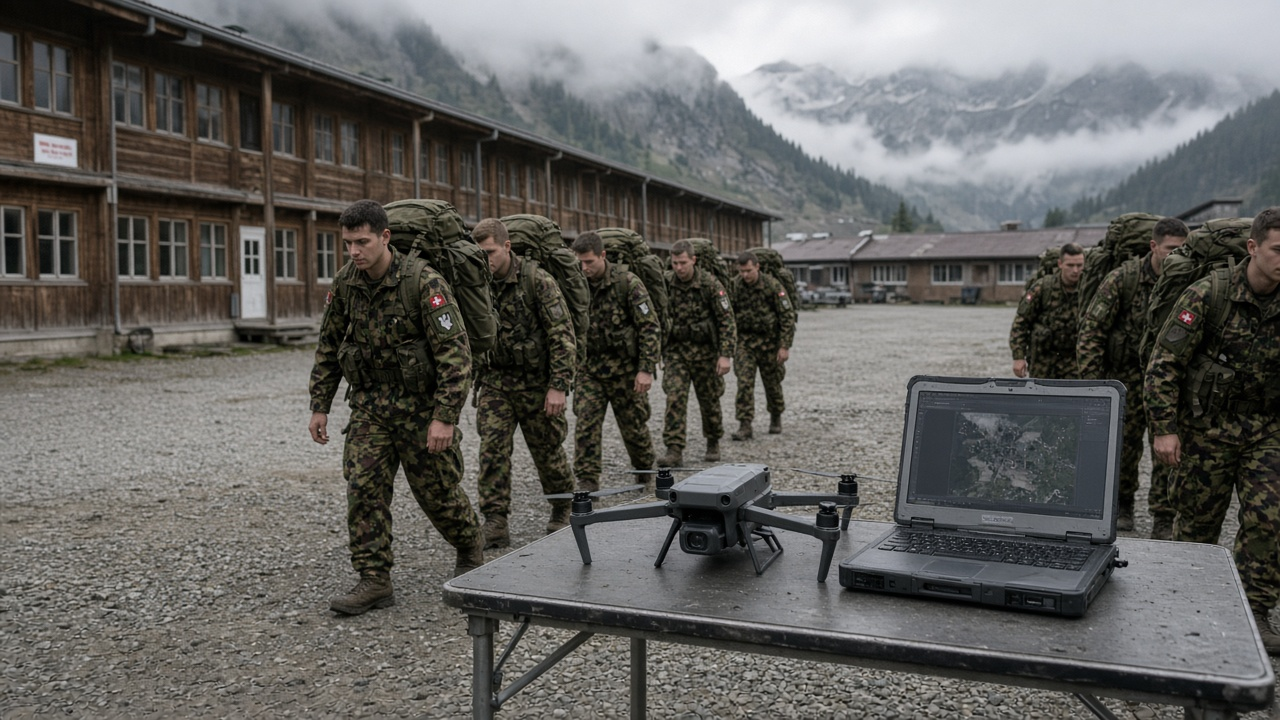
BERN. The Swiss army is rearming at the fastest pace in a generation and shrinking at the same time. Around 12,000 conscripts a year now leave the military track for civilian service, and on current trends the armed forces could fall below 130,000 members by 2030. The Federal Council’s answer, more flexible service and 700 new jobs in the defence ministry, is raising eyebrows in Bern.
Civilian service, the alternative open to conscripts who can show a conflict of conscience, has moved from exception to routine. Every year roughly 12,000 young men choose it over the recruit school, and the cumulative effect on the militia is now larger than any budget cut: whole functions, from logistics to air defence crews, are short of people.
The rearmament programme runs in the opposite direction. The new systems ordered or planned, drones, ground based air defence and cyber capabilities among them, require specialists the army does not have and cannot conscript quickly. The defence ministry says it needs up to 700 additional staff to procure, integrate and operate them.
700 Jobs and a Savings Dilemma
Defence minister Martin Pfister wants the new posts financed by savings inside his own department. Critics reply that every franc absorbed by administration is a franc not spent on the weapons themselves, and that a ministry buying drones and cyber defence cannot pretend to shrink at the same time. The tension will run through the winter budget debates.
The manpower answer under discussion is flexibility: recruit schools in blocks, service split across the year, models that fit around study and work. Supporters say the militia has always adapted to how Switzerland lives. Traditionalists answer that an army fitted around everything else risks becoming nobody’s priority.
The Women’s Quota as a Bright Spot
One trend runs in the army’s favour. The share of women in the forces is rising continuously, with interest strongest in leadership careers. From 2028, a mandatory orientation day is to introduce young women to military service before they choose their path, a measure the ministry hopes will reinforce the trend.
Switzerland has been here before, in numbers if not in kind. The army counted 600,000 members at the end of the Cold War, 200,000 after the reforms of the 1990s, and is now drifting toward a figure its planners did not choose. The difference this time is that the threat assessments are getting darker as the ranks get thinner.
Parliament has already shown it will fund the hardware: a dedicated drone battalion stands up in 2028, and the rearmament fund survives even after the Senate trimmed the VAT rise meant to fill it. The open question of the decade is who operates the hardware. The army parliament agreed to fund is larger than the army Switzerland is choosing to join.