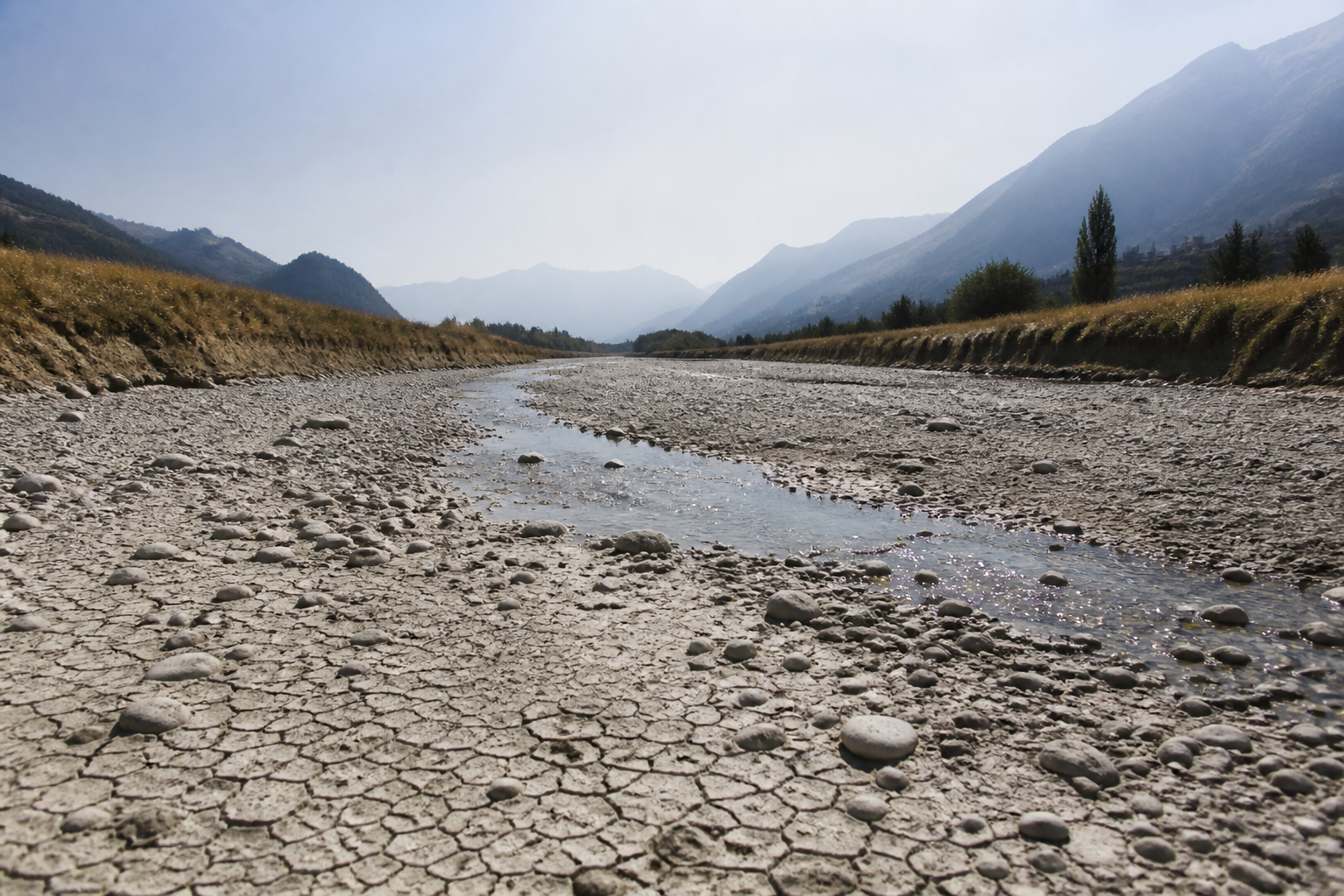
ZURICH. It is now official: Switzerland has just lived through its hottest and driest summer since records began in 1901. MeteoSwiss, publishing its seasonal assessment with the environment ministry and the WSL research institute, said the period from April to July combined record heat with barely half the normal rain.
The national average temperature ran 2.7 degrees Celsius above the 1991 to 2020 norm. Rainfall reached just 54 per cent of the long-term average, falling to 45 per cent in the Jura and 47 per cent on the Swiss Plateau. In Airolo, at the foot of the Gotthard, 341 millimetres of rain fell where 775 would be normal.
Between 1 April and 24 August, 139 of the country’s 408 monitoring stations recorded their largest precipitation deficit on file. In other words, more than a third of the national measuring network has never seen a drier stretch than the one that has just ended.
The consequences have been visible for weeks. The Aabach in Lucerne and Aargau carried less water in July than at any time since measurements began, and Lake Hallwil fell to its lowest July level on record. Forest fire danger reached the maximum level in four cantons this week, and the Federal Council on Wednesday assembled a CHF 70 million package for farms and forests.
MeteoSwiss attributes the drought to three compounding factors: a winter of meagre Alpine snow, the driest spring and early summer in the record, and repeated heatwaves that drove evaporation. Only glacial melt, running at exceptional rates, kept some rivers from falling lower still.
The scientific framing has shifted from surprise to confirmation. Since 2003, researchers at MeteoSwiss and ETH Zurich have tracked the rise of hot, dry summers and predicted they would become more frequent and more intense. A season like 2026, they say, is no longer unexpected; it is the trend arriving on schedule.
The political argument follows the data. Supporters of the food security initiative on the 27 September ballot cite the drought as proof that self sufficiency needs constitutional protection. Opponents answer that the drought package shows the state can act without it. Both are now campaigning with the same weather.
Autumn will not erase the deficit quickly. Soils dried to depth need sustained rain, not a single storm, and groundwater responds more slowly still. The reservoirs that feed the winter electricity system have recovered to 84 per cent, but the land beneath the forests, where the fire indices are set, remains the driest it has been in 125 years of measurement.
The record books will file 2026 beside 2003, 2015, 2018 and 2022, the summers that taught Switzerland what a warming climate feels like. The difference is that each new entry arrives closer together, and this one arrives with a referendum attached.