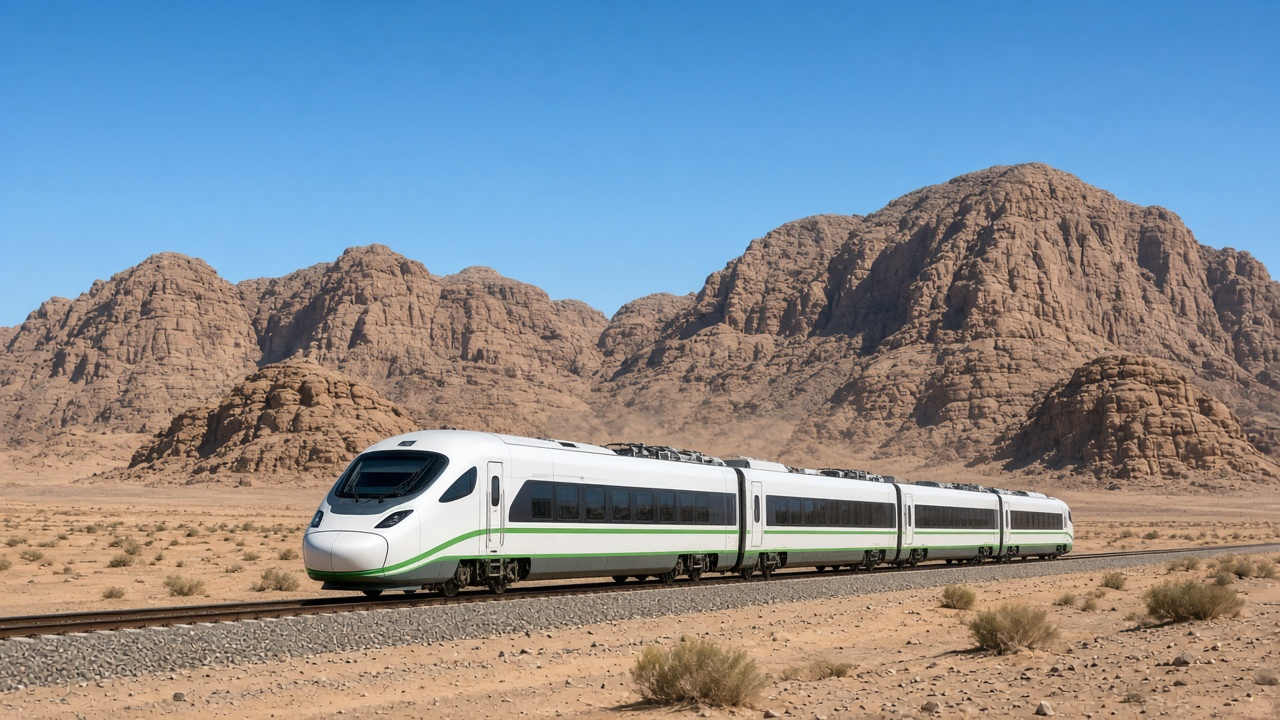
BUSSNANG. Saudi Arabia has given the green light for a second batch of ten intercity trains from Stadler, exercising an option written into the original contract and confirming an order worth around CHF 300 million for the Bussnang manufacturer. The follow-on order lifts the kingdom’s total commitment to twenty Swiss built intercity trains.
The option belongs to the first contract, signed in 2024, under which Stadler is delivering ten intercity trains engineered specifically for Saudi conditions. Deliveries from that batch are under way, and the customer, Saudi Arabia Railways, has moved to exercise its option earlier than the contract required, a signal the company reads as satisfaction with the first units.
Building for the Gulf is an engineering brief of its own. The trains must filter fine desert sand from every intake, cool their electronics and passenger saloons through temperatures that pass 50 degrees, and protect bogies and running gear from abrasive dust. Stadler says the design passed its climatic chamber testing in Switzerland before the first shell was built.
A Reference That Travels
For Stadler, headquartered in Bussnang in Thurgau, the value of the order exceeds the CHF 300 million on the contract. The Gulf region is tendering rail at a pace no other market matches, and manufacturers are judged on operating references in comparable conditions. A fleet that holds its availability targets in the Saudi summer becomes the centrepiece of every future bid from Morocco to Oman.
The order also lands at a useful moment for Swiss industry. Machine and precision exporters have spent the year absorbing new tariff friction in the United States, and the rail supply chain in eastern Switzerland, from aluminium carbody work to traction electronics, has been looking east for growth. Contracts of this size keep production lines and apprenticeship places in the Thurgau and St. Gallen corridor committed for years.
Saudi Arabia itself is building out its railways under the Vision 2030 programme, expanding passenger services between its largest cities and preparing lines that did not exist a decade ago. Saudi Arabia Railways has framed the intercity fleet as the backbone of that expansion and has spoken publicly about the punctuality it expects the Swiss trains to maintain.
Competition for the original tender was not gentle. Chinese and European rivals bid aggressively, and industry observers expect the same field, enlarged, for the next Saudi procurements. The early exercise of the option suggests the buyer preferred a proven design on the tracks it already knows over a fresh tender, the strongest commercial compliment a rolling stock builder can receive.
Stadler employs around 14,000 people worldwide and has made customisation for difficult climates a speciality, from Arctic Norway to the Australian outback. The Saudi trains are due to be delivered on a schedule agreed with the first batch, with maintenance support from the company’s regional organisation. Further options in the Gulf, the company says, are a matter for the customers who hold them.