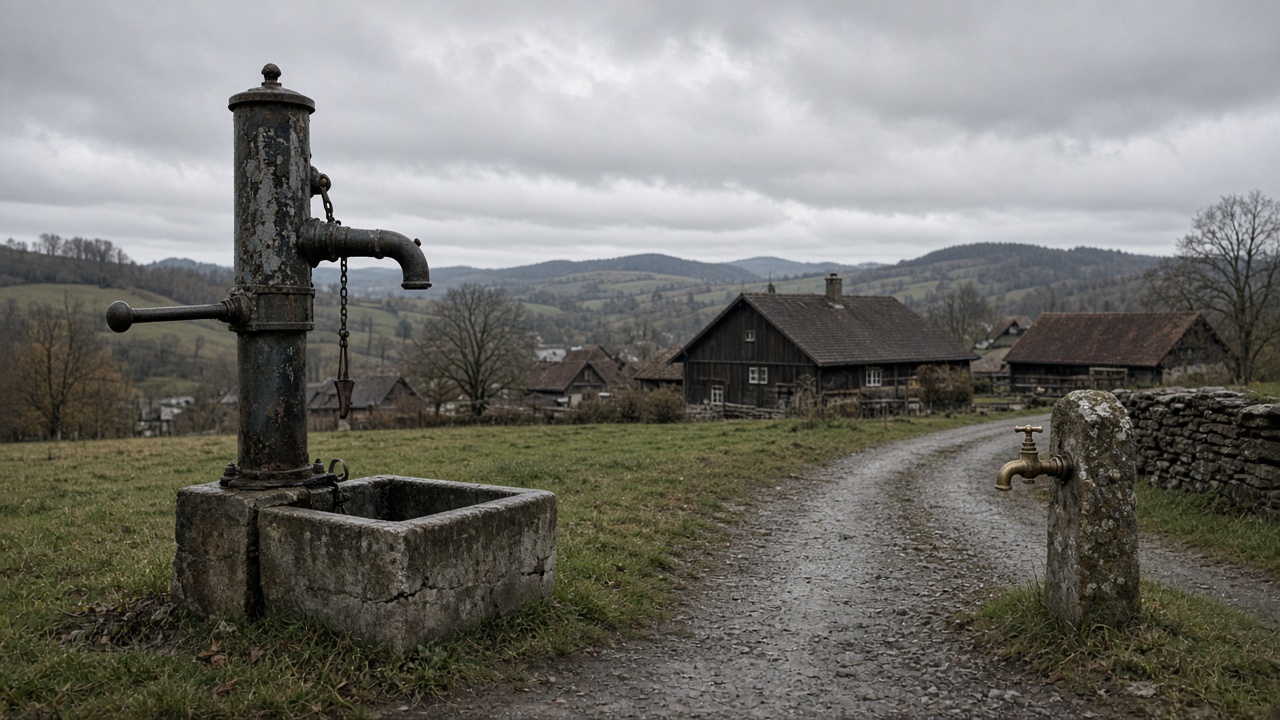
HOCHDORF. Three communes in the Lucerne Seetal will restrict drinking water from Saturday, even as this week’s rain and valley snow arrive. Hochdorf, Römerswil and Rain have issued matching orders that take effect on 28 November and can run for up to three months. The council in Hochdorf, which published its decision on Monday, says groundwater there is at a historic low, the springs have stopped delivering, and appeals to save water since July have left consumption roughly where it was a year ago.
The taps are still running. Hochdorf says supply is assured for now, through emergency links to other networks, and the utility WWZ judges that the system can probably hold until spring 2027. The fear is the season after that. Rain on the surface takes months to reach the aquifer. Mario Bucher, the Hochdorf councillor in charge of construction, transport and the environment, put the risk in one line: the communes will start spring already short of groundwater, and a dry winter would make the summer difficult.
What is banned from Saturday
The order stops uses the council classes as non-essential. Lawns and other green areas may not be watered. Forecourts, terraces and facades may not be washed. Swimming pools may not be filled. Ornamental fountains and water features stay off. Washing a vehicle with water from the public network is banned, unless the wash is needed for the business or for safety and is done in a plant that recycles the water. That last clause also limits commercial car washes. Vegetable beds, balcony plants and new plantings may still be watered sparingly, with a watering can. Firms, farms and public bodies are told to cut use to what is strictly necessary.
Hochdorf’s weakness is structural as well as climatic. The Seetal pumping station is its one main feed, and more than 90 per cent of that water comes from groundwater. Philippe Gattiker, head of networks at WWZ, said everyone now has to help spare those reserves. At the end of October the utility opened a provisional emergency link between Eschenbach and its network, able to bring in up to 660 cubic metres a day. That buys volume. It does not refill the aquifer. Bucher acknowledged the awkwardness of a ban in a wet November: people may find the order absurd when it is raining. He said the measurements are still the lowest since records at the site began.
A valley problem with a wider map
The Seetal is not alone. In the Suhrental in Aargau, industry has had to cut water use by 10 per cent since 2 November. Monday’s snow reached some of the lowest valleys in the north and east. That weather refills rivers faster than it refills a deep well. Hochdorf wants a longer pipe toward the Reuss valley so a future shortage has a second source. The council says that build takes time, which is why the order starts this week rather than in July.
For households the change on Saturday is specific. A lawn, a driveway and a swimming pool are off the public supply. A watering can for the vegetables is still allowed. The test the council has set itself is whether a binding order does what a flyer in July did not, before the communes carry this winter’s deficit into the months when gardens, farms and visitors all ask for water at once.