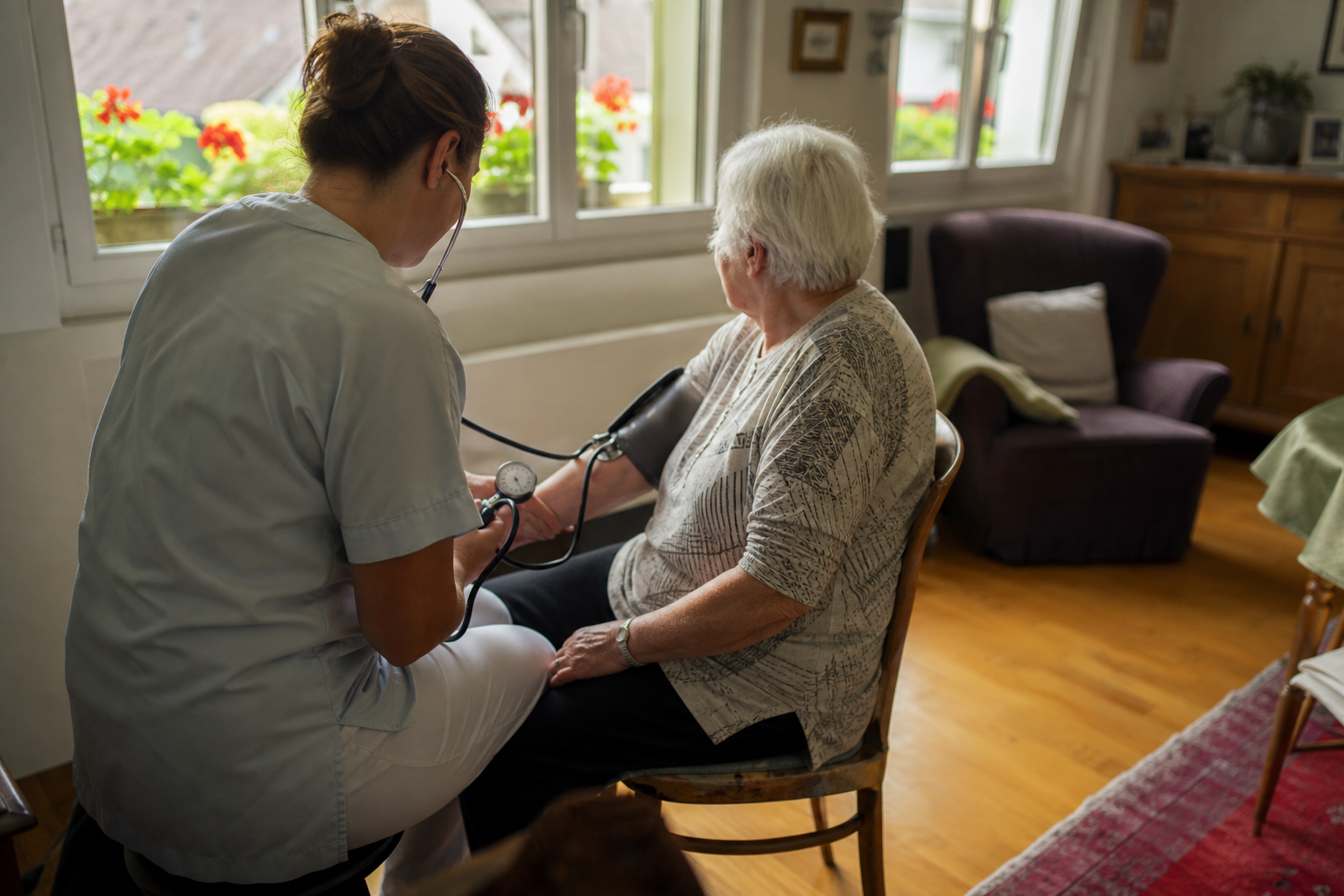
BERN. Five cantons will expand mental health services in schools from the start of the next academic year, placing psychologists and specialist nurses in secondary schools on a scale not previously attempted in Switzerland. The programmes in Zurich, Bern, Vaud, Ticino and Valais share a common architecture, though each canton has adapted the model to its own school law and language.
The core offer is a low threshold one. Pupils can book appointments directly, without parental consent from the age of fourteen in most participating cantons, and school based staff can refer severe cases into child and adolescent psychiatry through a fast track protocol that bypasses the ordinary waiting list. Each participating school receives a named contact in the cantonal psychiatric service.
The evidence behind the expansion has been accumulating for years. Waiting times for a first appointment in child and adolescent psychiatry routinely exceed four months in urban cantons and twice that in rural ones, and surveys by the Federal Office of Public Health suggest that roughly one in five adolescents reports moderate to severe psychological distress, a share that has not fallen back to pre pandemic levels. Hospital emergency departments report a doubling of adolescent psychiatric presentations since 2019.
The financing splits along familiar Swiss lines. Cantons pay for the school based staff through education budgets, while treatment after referral is billed to compulsory health insurance, with the usual franchise and co-payment applying. Participating cantons have committed a combined CHF 60 million over four years, enough for roughly 250 new posts. Zurich alone accounts for CHF 22 million of the total.
Paediatricians have welcomed the move with reservations. Their professional society supports early intervention but warns that school services must not become a substitute for the missing psychiatric capacity, merely a more comfortable queue for it.
Insurers, who ultimately fund the treatment end of the pathway, have been warmer than usual. A spokesperson for the insurers' association called prevention the rarest thing in health policy, adding: “A franc spent at fifteen can save fifty at forty.”
Teachers' unions raise a different concern. Schools, they argue, are being asked to absorb a health system failure, and staff need clear boundaries so that a maths teacher is not expected to triage a pupil in crisis. The cantonal programmes include training modules and supervision structures intended to draw exactly that line. Early feedback from pilot schools suggests teachers value the consultation line most.
The evaluation design is unusually rigorous for a social programme. All five cantons have agreed to common indicators, including waiting times, school attendance and self reported wellbeing, with a first comparative report due in 2028. Researchers at two universities will run the assessment independently of the cantonal administrations. The baseline survey covered 14,000 pupils before the summer holidays.
The political path forward depends on those results. If the indicators move, the cantonal health directors' conference is expected to recommend national adoption, and a parliamentary initiative already filed in Bern would create a federal co-financing framework for school based prevention. The initiative has collected the backing of 40 members of parliament across party lines.
For families, the practical change is modest but real. A teenager struggling with anxiety will be able to see a professional within days rather than months, at no direct cost and without a formal diagnosis following them into insurance records. Parents retain the right to be informed, except where clinicians judge that involvement would itself pose a risk.
Switzerland has long treated adolescent mental health as a private matter handled between families and specialists. The five canton experiment tests whether the schoolhouse, the one institution every teenager must attend, can do what the clinic network cannot.
The cantons chose different doors into the same room. Vaud has built its model around school nurses, Ticino around psychologists seconded from the cantonal service, and Valais around a mobile team covering several schools in the upper valley. That variety is deliberate: the evaluation is designed to show not only whether the approach works, but which version of it works best.