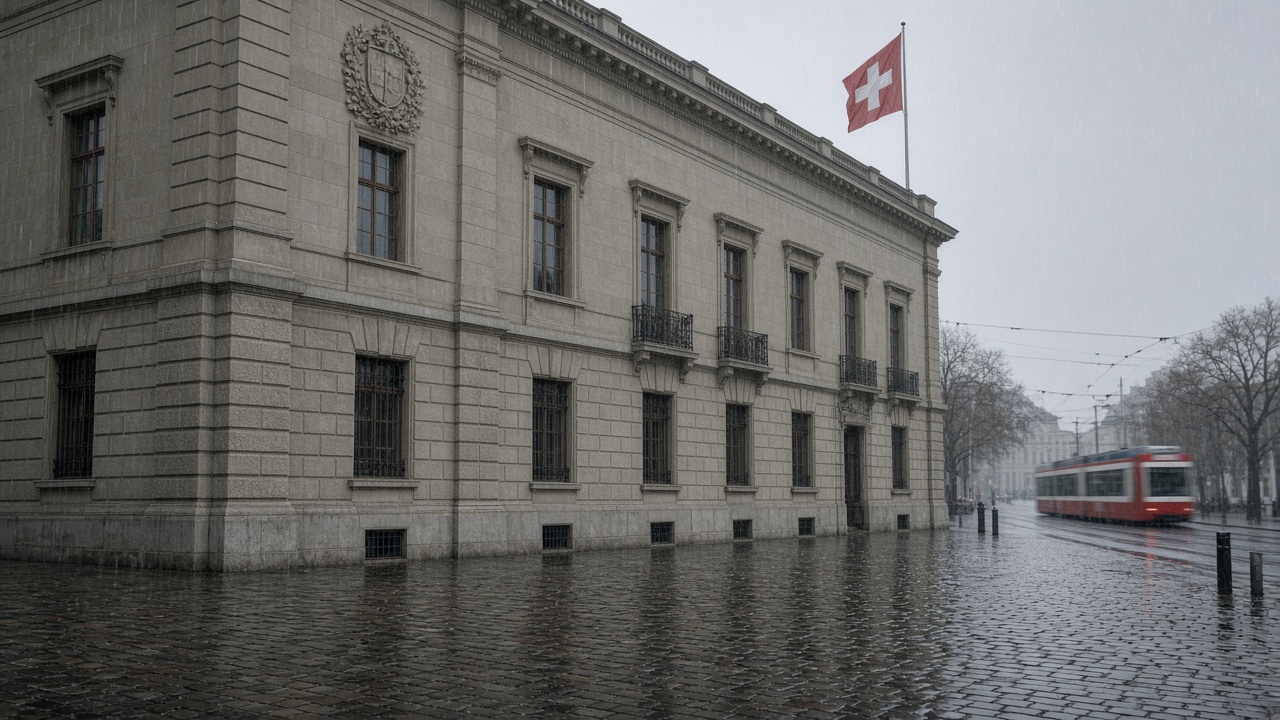
ZURICH. Martin Schlegel has said the Swiss National Bank would not shrink from taking its policy rate below zero if price stability were threatened over the medium term. The president told Handelszeitung, in an interview published on 5 November and still the line cited in Tuesday’s market briefings, that the bank would use its instruments if it saw that risk. He said it would not shrink from introducing a negative rate again, if monetary policy required it. The step is different from an ordinary cut. The hurdle for going below zero is higher, because policy transmits differently once rates are negative. He said the bank would not hesitate if it were necessary. A negative rate was in place from 2015 to 2022, and in his account it worked: the franc became less attractive, appreciation pressure eased, and that helped price stability.
The policy rate is zero, the lowest among major currency areas. Schlegel tied the latest inflation surprise to fuel. The October reading, 1.5 per cent, was higher than the National Bank itself had expected, and the rise came above all from fuel and heating oil after the conflict in the Middle East. So far, he said, the bank has not seen significant second-round effects, the passing of that shock into wages and other prices. It does not rule them out. If price stability were in danger, it would not hesitate to adjust policy.
Why Switzerland can sit at zero while others do not
Asked why Swiss rates are an island while policy rates and long-term yields have risen in many countries this year, Schlegel pointed to stability. Institutional and monetary stability, over decades, means investors demand a smaller risk premium. Swiss inflation is also typically lower than inflation abroad, so investors demand less compensation for rising prices. That, he said, is why Swiss rates have sat under international rates for decades.
He would not comment on whether the franc is currently too strong or too weak. He did say the gap in interest rates is, for now, an important driver of the exchange rate. The gap between Swiss rates and rates abroad is relatively large, and that dampens upward pressure on the franc. The same gap invites carry trades, borrowing in francs to hold higher-yielding currencies. Those trades can reverse. If uncertainty rises, the franc can come under appreciation pressure both because the trades are unwound and because the franc is treated as a safe haven. The bank’s answer, as he put it, is readiness. Monetary conditions are the rate and the exchange rate together.
What Tuesday’s oil release changes, and what it does not
Bern opened heating oil stocks on Tuesday, up to 30,000 cubic metres until 6 December, because the Rhine and foreign refineries cannot feed a late rush of orders. That is a supply decision. It is also the price story Schlegel has already named. October inflation at 1.5 per cent sits inside the National Bank’s definition of price stability, a rise in consumer prices of 0 to 2 per cent a year. Inside the band is not the same thing as expected. A reading the bank did not foresee, driven by fuel, is why a negative rate is being discussed in the same week as a stock release, even though the two tools answer different problems. Dearer oil pushes inflation up. A negative rate is the tool he described for when price stability is threatened the other way, including by a franc that rises too far.
Raiffeisen has said the bank could leave zero at its 10 December assessment and raise the rate. Schlegel’s interview does not confirm that, and it does not close it off. It says the bank will move if medium-term price stability is at risk, in either direction, and that a cut through zero has a higher bar than a cut that stays above it. Independence, he told the paper, exists so that the bank can take unpopular decisions. Negative rates were unpopular. They fell on savers and on the financial industry. He does not treat that unpopularity as a veto.
The question the December meeting has to answer
Between now and 10 December the test is whether fuel stays a one-off. If heating oil and petrol stop climbing, and wages do not follow them, the October print can fade without a rate move. If the oil shock spreads, zero may not be the last word in the direction of tighter policy. If the franc surges because the oil fear fades and the safe-haven bid returns, the interview has already described the other door. Neither door is a forecast. The president has said which condition would make him use the one below zero: a threat to price stability over the medium term, not a single noisy month.