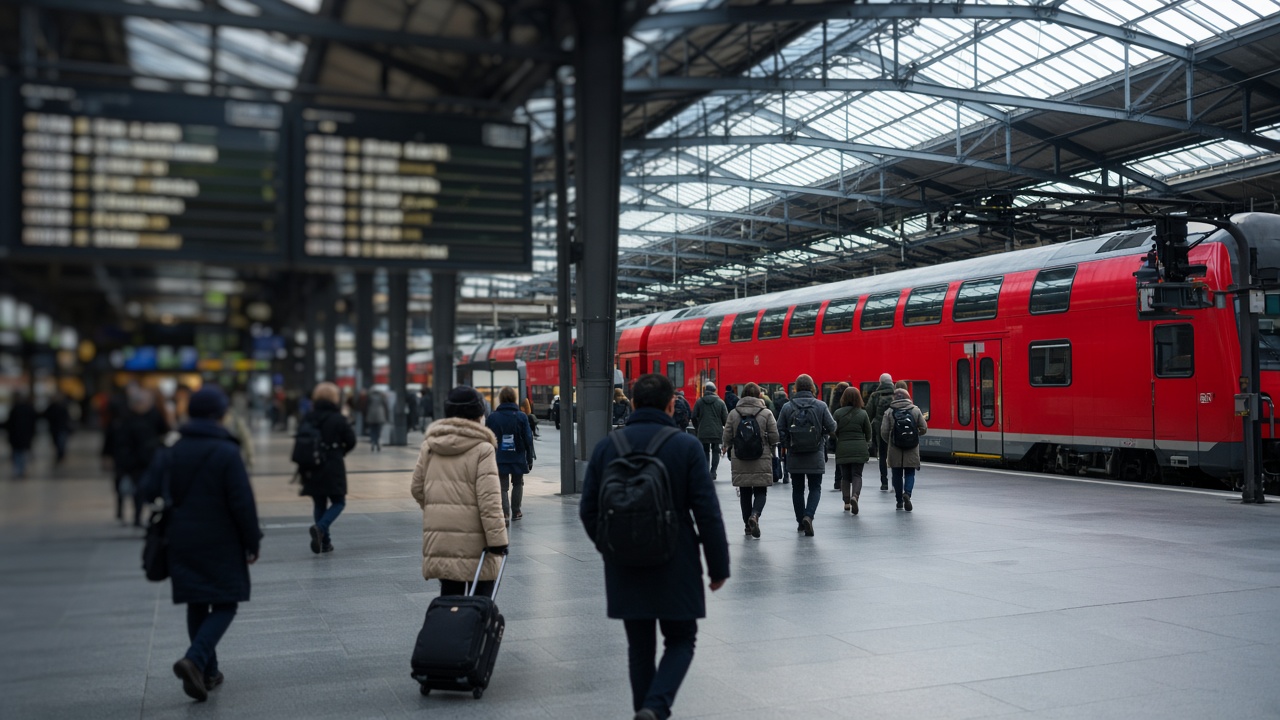
BERN. Swiss Federal Railways want a direct train to London, and this week they said where it should start. Philipp Mäder, head of international passenger traffic, told an industry meeting that SBB is looking at check-in terminals in Geneva, Zurich and Basel, because demand could fill a London train from each of them. Serving all three would be “the ideal”. He also said the feasibility has not been shown. No such train will run before the 2030s.
The meeting filled in a project that has been on paper since SBB, SNCF Voyageurs and Eurostar signed a memorandum in May. Studies already in the file put the journey at about six hours from Zurich, five and a half from Geneva and five from Basel. London is the busiest flight destination out of Switzerland, which is why a railway bothers with a route that needs a tunnel, a border and a new kind of station.
Why the terminal is the real project
Britain is outside the Schengen area. A passenger on a direct train cannot be checked on arrival in the way a passenger at an airport can be queued at the other end, because the Channel Tunnel’s security rules push immigration and security controls back to the station of departure. That means a separable waiting area, a platform that can be closed, and a terminal that is not just another ticket hall. It also means treaties. A Swiss station cannot run a British border without the governments agreeing that it may.
The trains themselves have to be approved for the tunnel, and they have to find a path on lines that other operators also want. Mäder’s wider plan for the 2030s is a set of daytime links to Brussels, Amsterdam, Barcelona, Rome and London. Amsterdam already has a night train. London is the one he called a flagship, and the one with the most companies trying to get through the same tunnel.
Geneva has the demand. Zurich has the problem.
On SBB’s estimates, the potential in western Switzerland matches the potential in German-speaking Switzerland. Inside that, Geneva on its own is expected to produce as much London demand as Zurich and Basel combined. In German-speaking Switzerland, Zurich should outpull Basel. Zurich also has the country’s largest airport, and the railway would like some of those passengers on a train.
Zurich is where the practical objections pile up. A new service needs spare paths on the already crowded line between Zurich and Basel. Unlike Basel and Geneva, Zurich has no large station project in the near future into which a London terminal could be built. Geneva’s Cornavin extension is the sort of building site that can absorb a new control point. Zurich would be adding one to a station that is not being rebuilt for it. Mäder’s “ideal” of three cities is, on those facts, a Geneva project that Zurich very much wants and cannot yet house.
Trains first, London second
SBB plans to tender next year for its own high-speed trains: 21 sets at first, with an option for 20 more. Italy and France come before Barcelona, Brussels, Amsterdam and London. That order is a clue to the timetable. The flagship is not the first train the new fleet is for. The Federal Council has said it will decide on the next official steps by the end of 2027, and that a direct service, if it is authorised, belongs to the 2030s. Until a terminal has a platform and a treaty has a date, the six-hour journey remains a study with a red train in it.