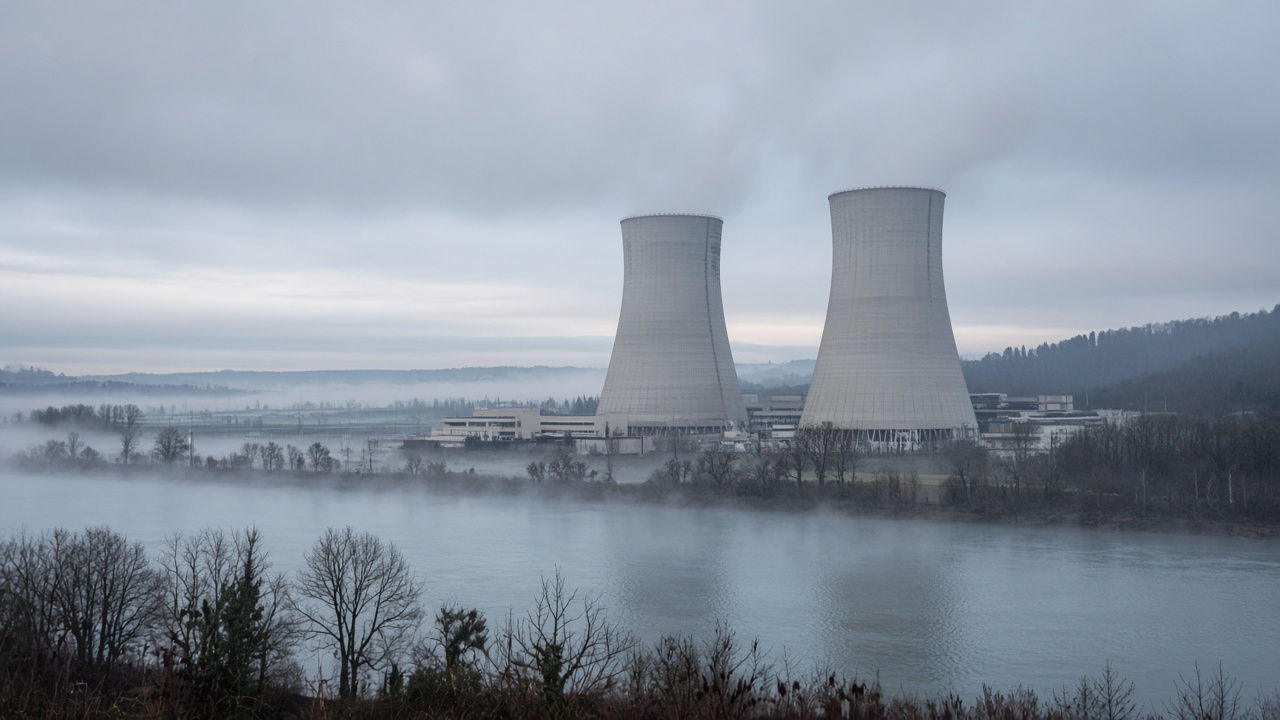
BERN. Energy Minister Albert Rösti said a no in February’s nuclear vote would force Switzerland to squeeze every kilowatt it can from nature. SRF’s Rundschau followed him on Wednesday as he made the case for lifting the ban on new nuclear plants, a ban parliament and the Federal Council voted in the summer to remove. Opponents have gathered the signatures for a referendum. The vote is on 28 February 2027.
The television report places Rösti at the general conference of the International Atomic Energy Agency in Vienna, where he set out the Swiss plan. The Energy Strategy 2050 still aims to expand renewables. Rösti said that build-out is stalling. He said he does not want to slow it. He wants nuclear kept available in case the rest is not enough. In Bern, asked what assurances he would need from opponents before nuclear became unnecessary, he said it would take at least an admission that every renewable project could proceed without appeals. Even then, he said, he would not be sure, because demand for electricity could rise sharply. If the vote is lost, he said, politics is never without an alternative, but a no would mean pressing “every kilowatt out of nature”.
A campaign that has not formally started
The Greens and the Social Democrats are leading the no camp. Lisa Mazzone, president of the Greens, said Switzerland does not need nuclear plants that are far too expensive and too dangerous. She said her side is ready for “the biggest referendum campaign in our history”, with the launch planned for the start of 2027. Rösti called the path ahead “a difficult job of persuasion”.
The committee is not only a left-wing list. Stefan Müller-Altermatt, a Centre Party national councillor, sits on it and disputes Rösti’s reading of the renewable numbers. He said photovoltaics is moving much faster, including in winter, where output has been higher than expected. He also said new nuclear plants would not be built any faster than the renewable capacity the country still has to add. That is the timetable argument, and it is the one a voter can test: a plant that is legal in 2027 is not a plant that is generating in 2027.
Who Rösti is collecting as company
In Vienna he met people who have already reversed a nuclear exit. Belgium’s energy minister, Mathieu Bihet, represents a government that left nuclear power and then turned back. Sweden’s state secretary Daniel Westlén told the programme his government wants new reactors because the climate transition needs more electricity. Rösti is collecting those examples before the Swiss campaign has formally begun. Switzerland came home from COP31 in Antalya this month without a deal on the fossil-fuel language it had wanted.
The yes case on the federal book is carbon-neutral power and security of supply. The no case is cost, waste and accident risk, plus the claim that renewables can arrive sooner. Between now and 28 February the argument will get louder, and the first organised push, on Mazzone’s timetable, is the new year. What Wednesday added is the minister’s own fallback. If voters keep the ban, he does not have a second technology in his pocket. He has the landscape, and he says the country would have to take more from it.