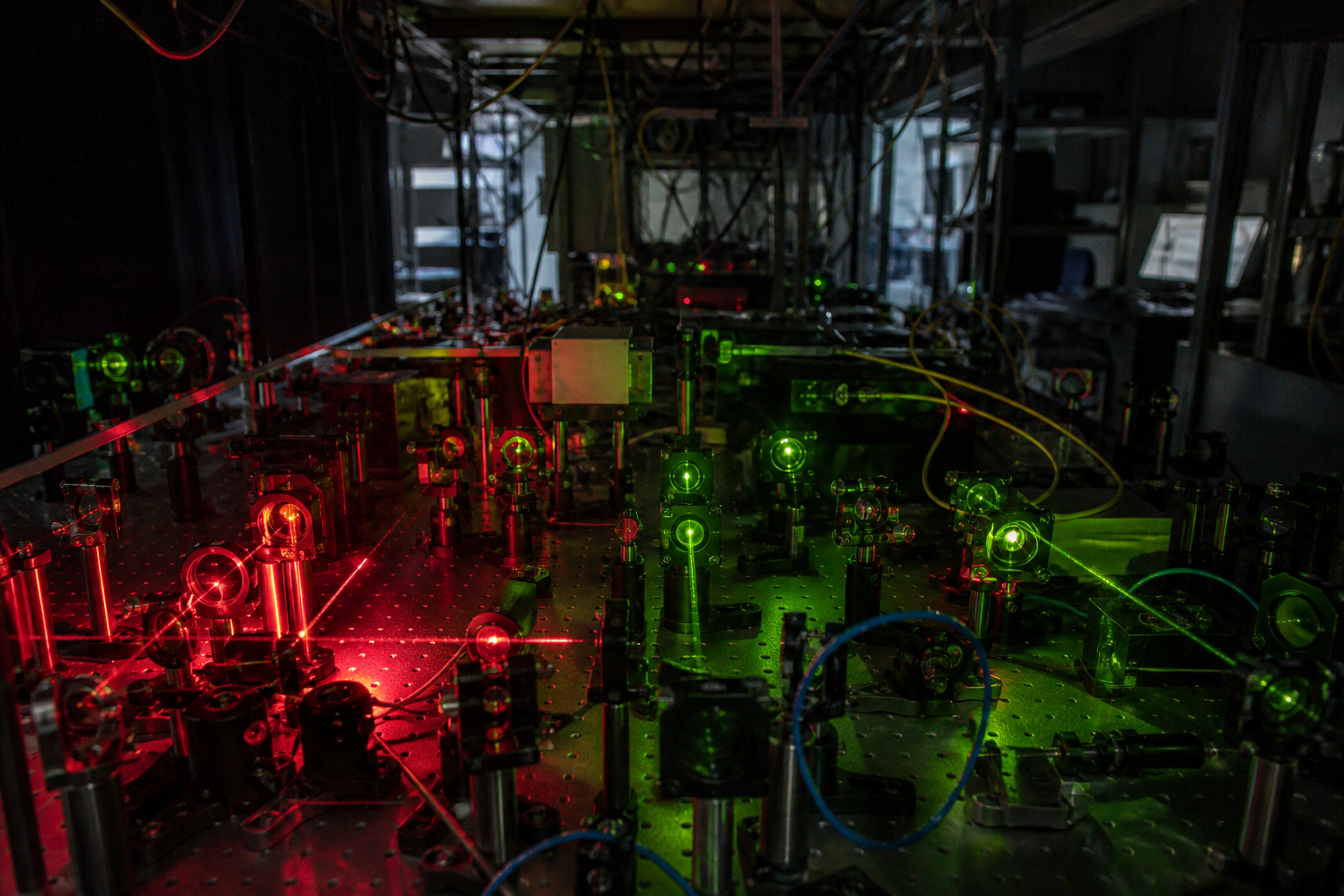
ZURICH. Switzerland is to build its first nationwide quantum communication test network, linking research laboratories in Zurich, Geneva and Basel with fibre-optic lines secured by the laws of physics rather than by mathematics. The Swiss Quantum Consortium, a grouping of universities, federal institutes and industrial partners, confirmed this week that it has secured funding for a three-year pilot phase worth roughly 40 million francs.
The network will use quantum key distribution, a technique in which encryption keys are encoded in single particles of light. Because measuring a quantum particle inevitably disturbs it, any attempt to intercept the key leaves a detectable trace, alerting the two legitimate parties that the line has been compromised. The protocol underlying the scheme descends from a proposal made in 1984, refined over four decades of laboratory work.
In practice, pairs of photons will be sent through existing dark fibre leased from telecommunications operators. Nodes spaced along each route will regenerate the quantum signal using trusted relays, since photons are absorbed by glass after roughly 100 kilometres, and fully quantum repeaters remain an experimental technology. Detecting single photons at the far end requires superconducting sensors cooled below one degree above absolute zero, hardware that Swiss suppliers happen to manufacture.
A parallel work package will test satellite links, using optical ground stations in the Alps to exchange keys with low-orbit spacecraft. If the trials succeed, the mountain stations could one day anchor the Swiss network to a future European constellation, extending quantum security beyond the reach of terrestrial fibre.
The project matters well beyond Swiss borders because Europe is racing to protect critical infrastructure against the day when large quantum computers can crack the mathematical encryption that now guards banking and government data. A working national testbed gives Swiss firms a head start in certifying equipment that other countries will eventually have to buy.
ETH Zurich and the University of Geneva, where some of the foundational experiments in quantum cryptography were performed in the 1990s, lead the scientific side. Industrial partners include telecom carriers and several small firms spun out of university laboratories, with the Swiss National Science Foundation and the federal innovation agency sharing the cost.
The consortium is candid about the limits. Quantum key distribution protects data in transit, not data stored on servers, and the trusted relay nodes are themselves physical weak points that must be guarded. Sceptics also note that conventional post-quantum mathematics, already being standardised, may prove cheaper for most users. The pilot's honest purpose is to find out which applications genuinely justify the hardware.
“This is not about replacing the internet,” said the consortium's scientific coordinator. “It is about proving that physics-based security works at the scale of a small country.”
The path from laboratory to application runs through the financial sector first. Banks in Zurich and Geneva have agreed to route real, non-critical traffic over the network in its second year, providing the kind of operational data that no bench experiment can supply.
Installation of the first link, between two ETH Zurich campuses and a data centre outside the city, is scheduled to begin in the spring. Geneva and Basel are due to come online within eighteen months, with a cross-border connection to a partner network in France under discussion.
Switzerland joins a crowded field. China operates a 2,000-kilometre quantum backbone between Beijing and Shanghai, and the European Union has committed to a continent-wide quantum communication infrastructure by the end of the decade. The Swiss consortium argues that a smaller, tightly instrumented network can answer engineering questions the larger projects skip.
If the pilot succeeds, the partners intend to propose a permanent national infrastructure in 2029, open to government agencies and commercial customers alike. For a country whose banking secrecy once rested on vault doors, the appeal of a fibre that can betray an eavesdropper is not hard to grasp.