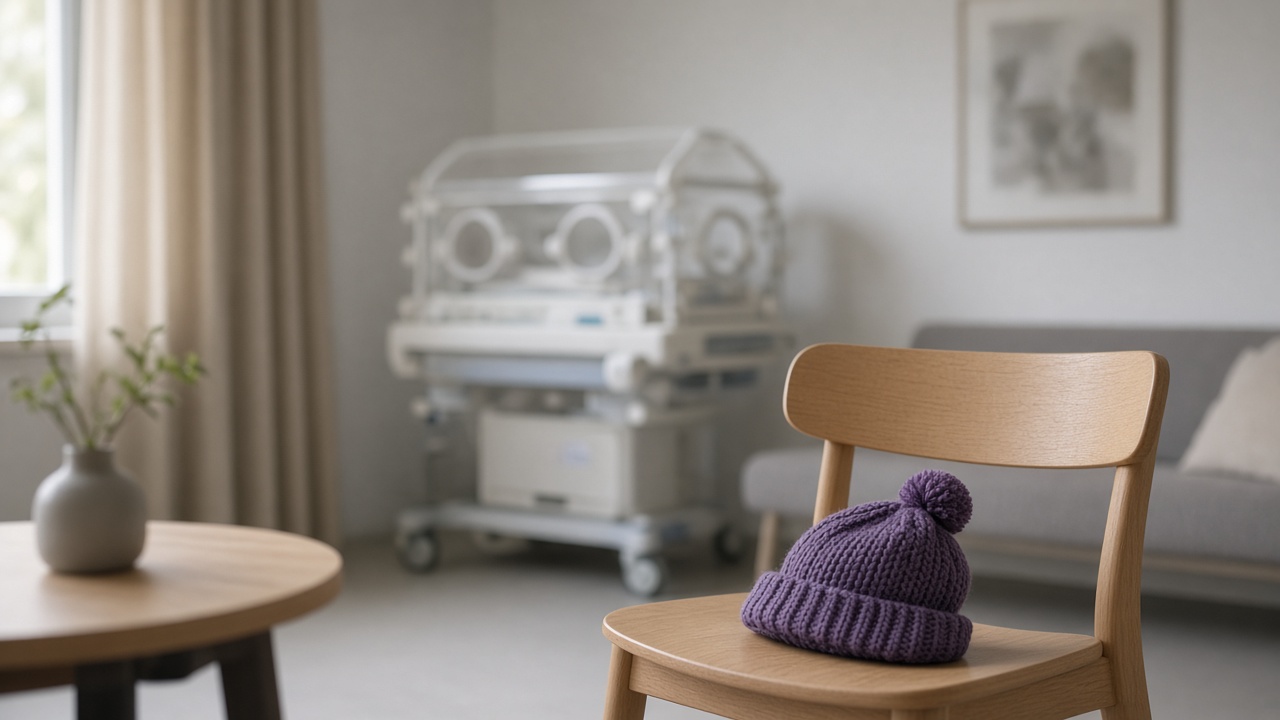
LAUSANNE. About 5,000 babies a year are born in Switzerland before the 37th week of pregnancy. The Federal Statistical Office counted 4,920 premature births in 2023, about 6 per cent of all births, the Swiss Paediatric Society says. Roughly 80,000 babies are born in the country in a year. Sunday is World Prematurity Day, and the hospitals are using it to show families what the first weeks actually look like, and to say that the hard part often starts after the discharge letter.
In Lausanne, the neonatal unit at the university hospital is holding free workshops today at the maternity ward. No registration is required. Visitors can learn about developmental care and see the neonatal ambulance the hospital calls its baby rescue. There is also a non-competitive run for families and for the teams who look after them. In Valais, the cantonal hospital has a charity run and information stands staffed by clinicians and volunteers. Geneva's university hospitals have set their public programme for Tuesday, including a fully equipped incubator and a run of workshops.
Where to go if today is your day
German-speaking hospitals have their own rooms open. In Bern, former neonatal parents are receiving people from 2pm to 4pm in the family room of the neonatology unit at the Inselspital. In Lucerne, Frühchen und Neokinder Schweiz is holding a family day from 11am to 4pm at the BBZB hall by the station. In St Gallen, the children's hospital is open from 10.30am to 2pm for parents and staff, with a look back over 50 years of care and a chance to see incubators, feeding tubes and the chairs used for skin-to-skin contact. Those are meetings, not clinics. A sick child still belongs with the duty team, not at an information stand.
The support that lasts is the volunteer kind. In French-speaking Switzerland the association Né Trop Tôt, Born Too Early, runs drop-in sessions and visits on neonatal units and in family rooms. It has branches in the hospitals of Lausanne, Neuchâtel, Fribourg and Geneva. The offer is personal because the strain the hospitals describe does not end when the baby reaches a normal weight. Sleep, work, the next pregnancy, and the fear that never quite leaves are the part a leaflet on lung development does not cover.
What the 6 per cent does not mean
Six per cent is a share of births, not a prediction for one pregnancy. Most babies born a few weeks early do well. Some born much earlier spend months in a unit and leave with needs that follow them to school. The day is built for both families, which is why the workshops talk about developmental care rather than about a single miracle story. A parent who is in it now should take the practical offer: the workshop, the other parent who has already done the nights, the association that will still answer in March.
If you are deciding whether to go, the Lausanne workshops need no ticket, and the Bern room opens at 2pm. If you cannot go, the useful act is smaller. Ask the unit which association covers your hospital, and save that number next to the paediatrician's. Prematurity Day is one Sunday. The 4,920 families in the last full count are a long calendar.