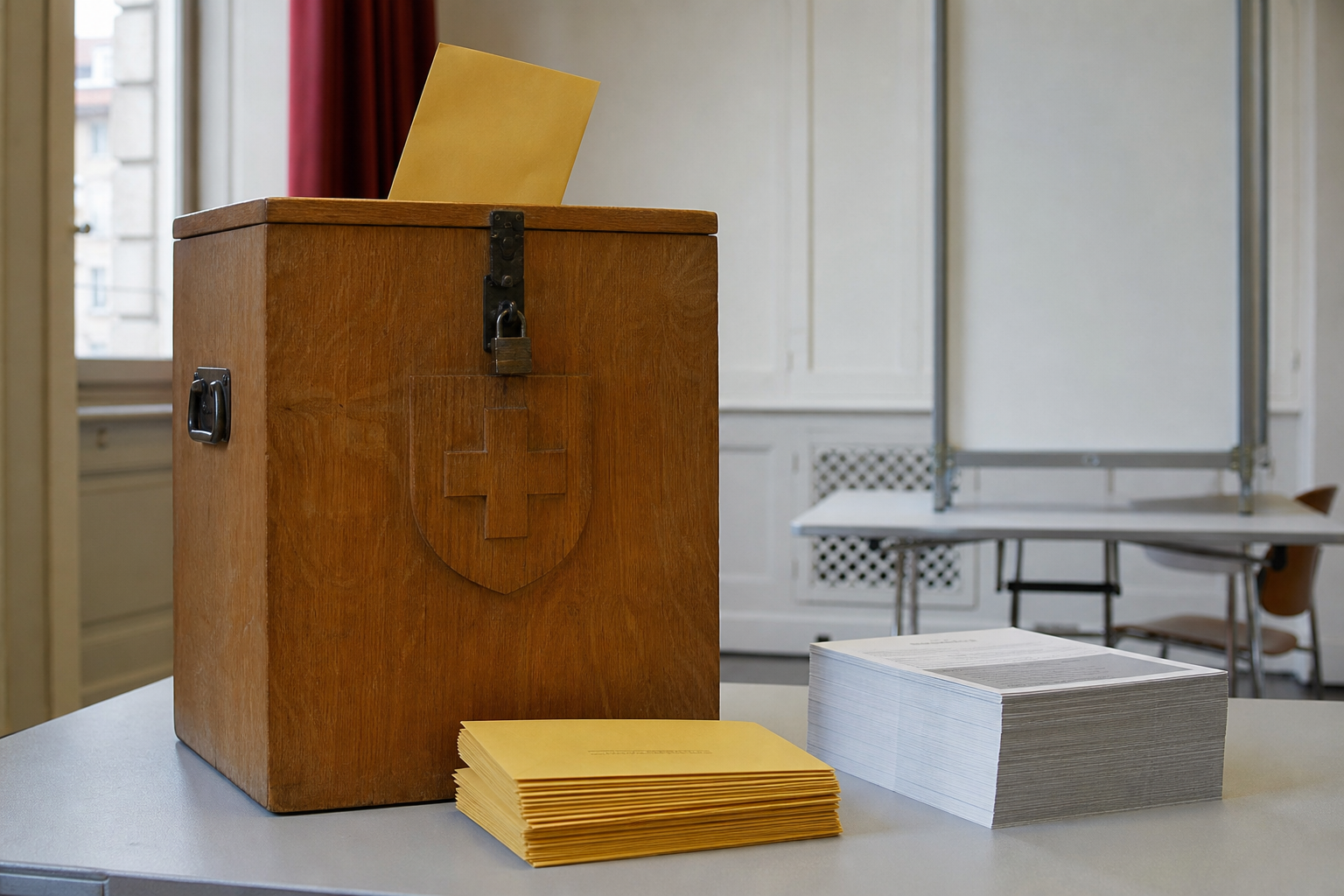
BERN. The question on the ballot paper in November fits in a single sentence, but the package behind it runs to more than a hundred pages and touches every wage slip and pension statement in the country. Voters are being asked to approve the most consequential rewrite of old age provision since the last major AHV revision two decades ago.
The background is demographic arithmetic. Around 2.6 people of working age now support each pensioner; by 2035 the ratio will be 2.1. The AHV compensation fund, the buffer that smooths the gap between contributions and payouts, is projected to fall below the legal threshold by 2030, with annual shortfalls approaching CHF 2.8 billion.
The reform's first pillar measure is a gradual rise in the reference retirement age from 65 to 66, phased in at two months a year from 2030. Flexible retirement between 63 and 70 remains, with actuarial adjustments intended to make the timing of retirement roughly cost neutral. The change applies identically to men and women.
The second measure is financial. Value added tax would rise by 0.4 percentage points, from 8.1 to 8.5 per cent, with the revenue, about CHF 2.5 billion a year, dedicated to the AHV. A compensation fund of CHF 1.2 billion a year cushions the transition for workers in physically demanding occupations, who may retire at 64 without deductions if they meet contribution conditions.
Parliament approved the package by the narrowest of margins, with the centre and the liberals in favour and the left opposed. Trade unions collected the 50,000 signatures required for an optional referendum in under eight weeks, a pace that signalled the strength of feeling. The vote is set for the last Sunday of November.
The campaign lines are drawn with unusual clarity. Supporters, including the Federal Council, the business federations and the centre right parties, argue the package secures pensions for the next decade. Opponents, led by the trade union federation and the left, call it a pension cut financed by a tax on consumption that hits the poorest hardest.
Polling currently shows the electorate split, with 48 per cent in favour, 45 per cent against and the rest undecided. Support is strongest among German speaking voters over 55; opposition is concentrated among French speakers and voters under 35, a coalition that has defeated pension reforms before.
The government is campaigning on the arithmetic of delay. “Doing nothing is the most expensive option of all,” a spokesperson for the Federal Social Insurance Office said, noting that every year without reform adds roughly CHF 900 million to the funding gap.
Critics answer with an arithmetic of their own. A rise in VAT, they argue, takes a larger share of income from a supermarket cashier than from a company director, while the later retirement age lands hardest on those with the shortest life expectancy. They favour funding the AHV through higher contributions on capital income, a route parliament explicitly rejected.
If the law passes, the retirement age begins its slow climb in 2030 and the VAT rise takes effect a year later. If it fails, the compensation fund remains legal until 2032, after which benefits are technically unsecured and parliament must start again. Officials estimate a restart would take at least four years.
The rest of Europe is watching with more than neighbourly interest. Switzerland's three pillar system is routinely cited abroad as the model of funded, consensual provision, and its rare pension votes are treated as weather vanes of what electorates will accept. Germany, France and Italy have all discovered how combustible the subject can be.
Whichever way the vote goes, the demographics will not move. The next generation of reformers, in Bern and in the cantons, will inherit the same arithmetic with fewer options, which is why even the campaign's fiercest opponents expect the issue back on the ballot before the decade is out.