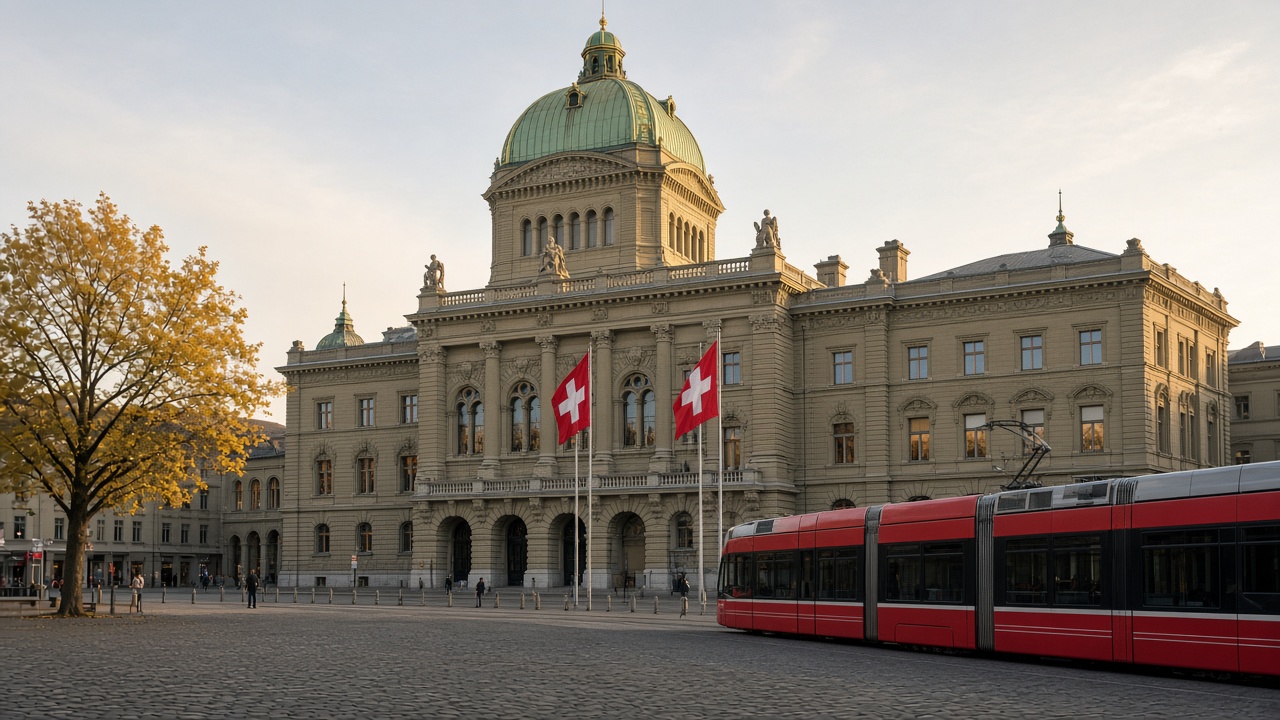
BERN. No candidate has formally declared, and the race to succeed Guy Parmelin is already the only conversation in the Bundeshaus corridors. Less than a day after the economics minister announced his departure, the names, the timetable and the first veto points of the succession are all in circulation.
The calendar is fixed. The cantonal sections of the People’s Party have until 12.00 on Friday, 23 October to report candidates to the search committee under Caspar Baader. The committee holds hearings and delivers its proposal to the parliamentary group leadership by 13 November. The group nominates the official ticket on 20 November, and the 246 members of the United Federal Assembly elect on 9 December. How many names the ticket will carry, the party leadership has not said.
The favourites
Natalie Rickli is the most prominent name on the early lists. Zurich’s health director sat in the National Council from 2007 to 2019, built a profile on media policy and child protection, and can point to years of executive experience running a large cantonal department. Her contacts inside the parliamentary group are considered excellent.
Céline Amaudruz is the francophone frontrunner. The 47 year old Genevan has sat in the National Council since 2011, is vice president of the SVP, and is widely credited as one of the organisers of Parmelin’s own election. She occasionally departs from the party line on social questions, which costs her nothing with the centrist voters she would need. She declined to stand when Ueli Maurer resigned in 2022. This time, people close to her say, she is thinking seriously about it.
Esther Friedli, the St. Gallen member of the Council of States, completes the trio of women at the top of most lists. From Central Switzerland, Monika Rüegger of Obwalden, party president Marcel Dettling of Schwyz and Thomas Aeschi of Zug are all mentioned, though the hardliners among them would struggle to find votes outside their own group.
The language question
Franz Grüter of Lucerne has openly declined to rule himself out. A National Councillor since 2015 and a member of the foreign affairs committee, he notes that Lucerne has not supplied a federal councillor since Kaspar Villiger left office in 2003. In Vaud, the cantonal party says it will campaign for the seat to remain in French-speaking Switzerland: besides Amaudruz, the names of Yvan Pahud, in the National Council only since 2023, and Nicolas Kolly of Fribourg, seen as a consensus builder, are circulating. Sylvain Freymond, the Vaud SVP president, says it is still early, but insists a western Swiss must hold the seat.
One name has already withdrawn herself. Magdalena Martullo-Blocher, the chief executive of the Ems chemicals group and the party’s most famous business figure, said she will not stand. “I am an entrepreneur,” she told Swiss television, adding that the party has good candidates and, she hopes, will not need her.
The arithmetic of the election favours the moderate. The SVP can nominate, but the whole assembly elects, and a candidate who cannot reach beyond the party’s own ranks will not pass 124 votes. That is why the talk in Bern keeps returning to the same shortlist, and why a first is genuinely on the table: in its history, the People’s Party has never sent a woman into the Federal Council. Eveline Widmer-Schlumpf, elected in 2007, was expelled from the party within months.
What the winner inherits is a seat at the centre of every fight of the coming year: the EU package referendum campaign, the tariff dispute with Washington, and the economics portfolio that Parmelin has shaped since 2019. The new councillor will have barely a year in office before the 2027 general election tests the whole government. The search committee opens its mailbox on Monday.