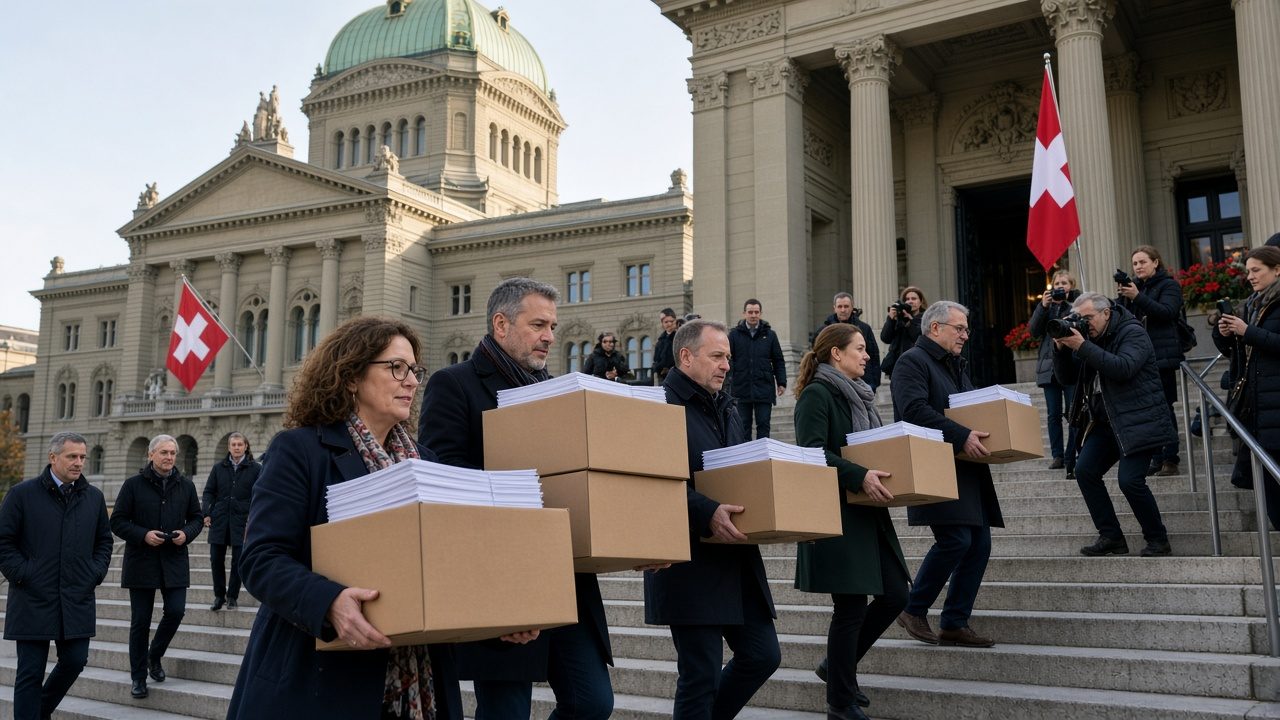
BERN. The referendum against the construction of new nuclear power plants in Switzerland is almost certain to happen. The opposing coalition announced on Wednesday that it had collected more than 131,800 signatures, well over double the 50,000 required, and submitted them to the Federal Chancellery in Bern before Thursday’s deadline.
The vote challenges the revision of the Nuclear Energy Act approved by parliament earlier this year, which lifts the ban on building new reactors in force since 2017. The coalition behind the referendum, the Greens, the Social Democrats, the Green Liberals and a group of environmental organisations, argues that new plants would make Switzerland dependent on imported fuel, cost billions and slow the expansion of renewable energy.
A fight years in the making
Switzerland’s remaining reactors at Beznau, Gösgen and Leibstadt supply roughly a third of the country’s electricity, and may run for as long as they remain safe under current law. What the revised act changes is the future: for the first time since the phase-out decision that followed Fukushima, utilities could apply to build again.
The business case for doing so remains unproven, which is why the campaign matters more than the construction queue. No utility has filed a project. What the energy companies wanted, and what parliament gave them, was the removal of the legal barrier before the winter supply gap expected in the 2030s forces the question.
Industry lines up for a yes
The pro-nuclear camp organised early. In late September, an alliance including economiesuisse, the Swiss Nuclear Forum, the small business federation, Swissmem, Centre Patronal, scienceindustries and the electricity groups Axpo, Alpiq and BKW launched its campaign for a yes vote, arguing that Switzerland cannot afford to close any door while its winter deficit grows.
The signature count suggests the no camp will match it in energy, if not in money. Collecting 131,800 names in the time available is the kind of result that disciplines a campaign, and the coalition announced the figure with the confidence of a committee that knows it will be taken seriously.
If the Federal Chancellery confirms the signatures, the earliest realistic voting date is 28 February 2027. That sets up the first national vote on nuclear power since the phase-out era, at a moment when winter supply worries have returned and the government is asking voters to think about electricity as a strategic resource again.
Both sides will frame the same number differently between now and then: the share of Swiss electricity that comes from reactors built more than forty years ago. For one camp it is a success story to extend. For the other, it is a dependency to retire. The voters will decide which framing survives February.