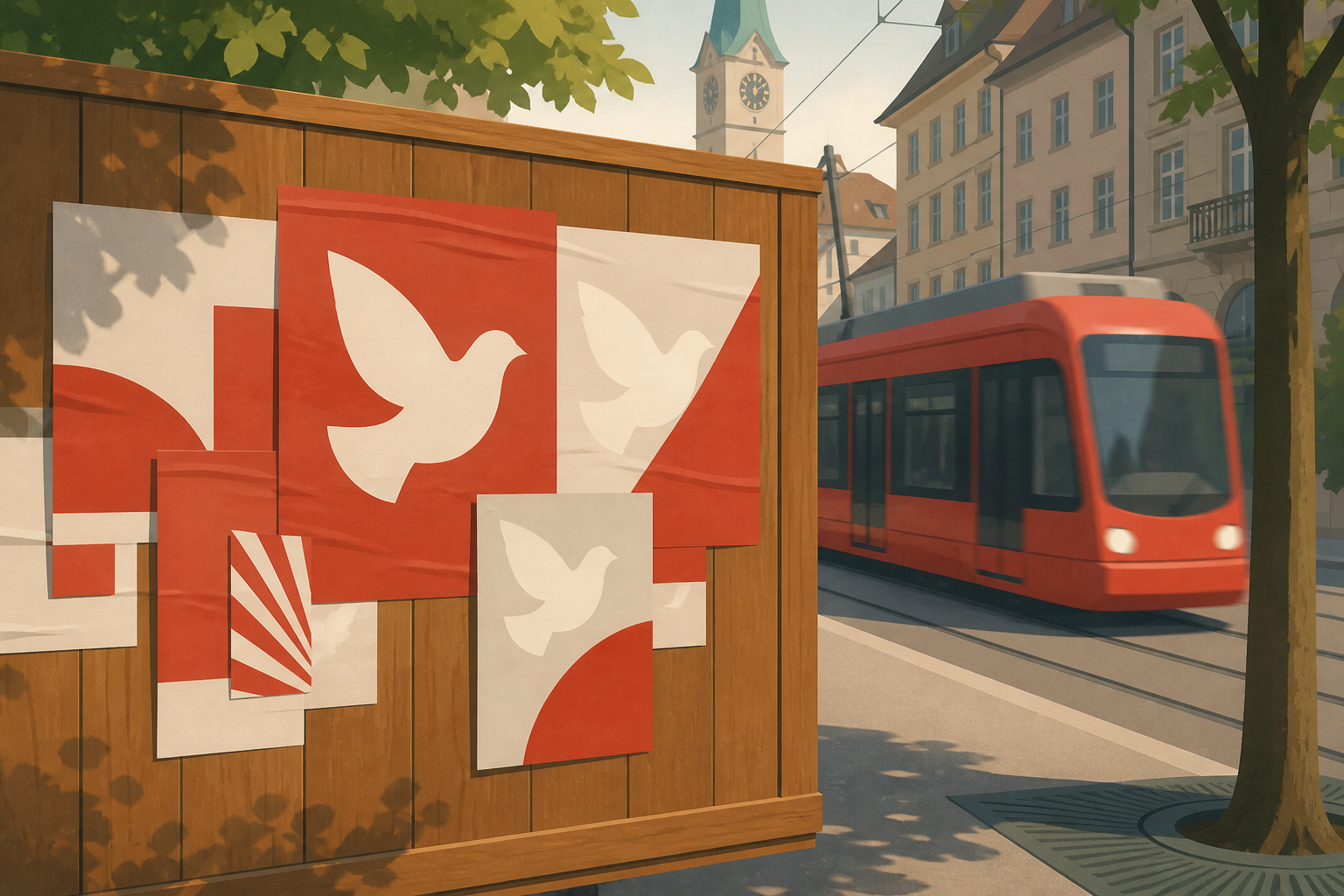
BERN. With four weeks to the referendum, the campaign for a stricter neutrality has moved onto the streets. Posters showing doves of peace and calling on voters to reject war have appeared on hoardings from Geneva to St Gallen, and the Yes committees have begun their heaviest week of advertising yet. It is the most visible, and the most expensive, phase of a campaign the polls say is failing.
A survey conducted by the Leewas institute for the Tamedia titles and 20 Minuten, published on Wednesday, puts rejection of the initiative at 62 per cent against 36 per cent in favour, with 2 per cent undecided. That is a heavier defeat than the 54 to 42 margin recorded by gfs.bern in the first poll of the campaign a week earlier, and it suggests the government's opening argument, that the text fixes a problem Switzerland does not have, is landing.
The popular initiative, driven by the association Pro Schweiz, would write a narrower concept of neutrality into the Federal Constitution. Switzerland would be declared permanently and armedly neutral, barred from joining any military or defence alliance, and forbidden from imposing sanctions on belligerent states except those ordered by the United Nations. Cooperation with alliances such as NATO would be permitted only if Switzerland itself were under attack, or an attack were being prepared.
The campaign has also acquired a sponsor it did not ask for. Russian officials and state media have praised the initiative openly, reasoning that a Switzerland barred from levying sanctions on its own authority would never again have frozen Russian assets as it did after 2022. Moscow's applause, delivered in the tones of approval reserved for other people's useful decisions, has been received in Bern as a gift that keeps on costing.
The initiative's public face is Christoph Blocher, the former federal councillor whose earlier committee, the Action for an Independent and Neutral Switzerland, paved the way for Pro Schweiz. Interviewed at his home in Herrliberg this month, Blocher frames the vote as a choice between sovereignty and drift. The Swiss People's Party backs the text, and a self described pacifist and internationalist committee, uniting the Labour Party, the Communists and the Swiss Peace Movement, campaigns alongside it from the opposite direction.
Arrayed against them is nearly everyone else. The Federal Council and a large majority of parliament recommend a No vote, without a counter proposal. The Social Democrats, the Centre, the Liberals, the Greens and the Green Liberals all argue that present practice, staying out of alliances, staying out of wars between third states, and implementing UN sanctions, already meets the duties of a neutral state.
What the No side cannot match is money. Billboard bookings and campaign filings show the Yes committees outspending supporters of the status quo by a wide margin, much of it on the dove posters and on reminders timed to land with the postal ballot envelopes now reaching households. The government side is relying instead on the parties' machinery and a stream of expert warnings about sanctions policy.
Pollsters urge some caution about the gap. Fabio Wasserfallen, who has tracked the campaign, notes that the side spending more can still narrow a deficit in the final weeks, and that the Yes camp's simple emotional pitch, peace, sovereignty, no foreign entanglements, is cheaper to communicate than the No camp's case for flexibility. Initiatives, however, usually lose support as their details are debated, and this one's details are now being debated daily.
Swiss neutrality has been recognised internationally since 1815 and written into the constitution since 1848. It kept the country out of both world wars, and its modern meaning was last seriously tested after Russia's full scale invasion of Ukraine, when Bern chose to mirror European Union sanctions. That choice is the initiative's true target, whatever the posters say.
The Yes campaign's best remaining asset is the calendar's uncertainty: a late international crisis could still reorder the argument. Its worst asset is the endorsement it cannot return. Voters who associate the text with the Kremlin's approval are, the surveys suggest, precisely the undecided moderates the committee needs.
Postal voting is already under way, and both camps will spend the coming fortnight chasing the small stock of genuinely undecided voters. The result on 27 September will not abolish Swiss neutrality either way. It will decide who gets to define it: the constitution, or the government of the day.