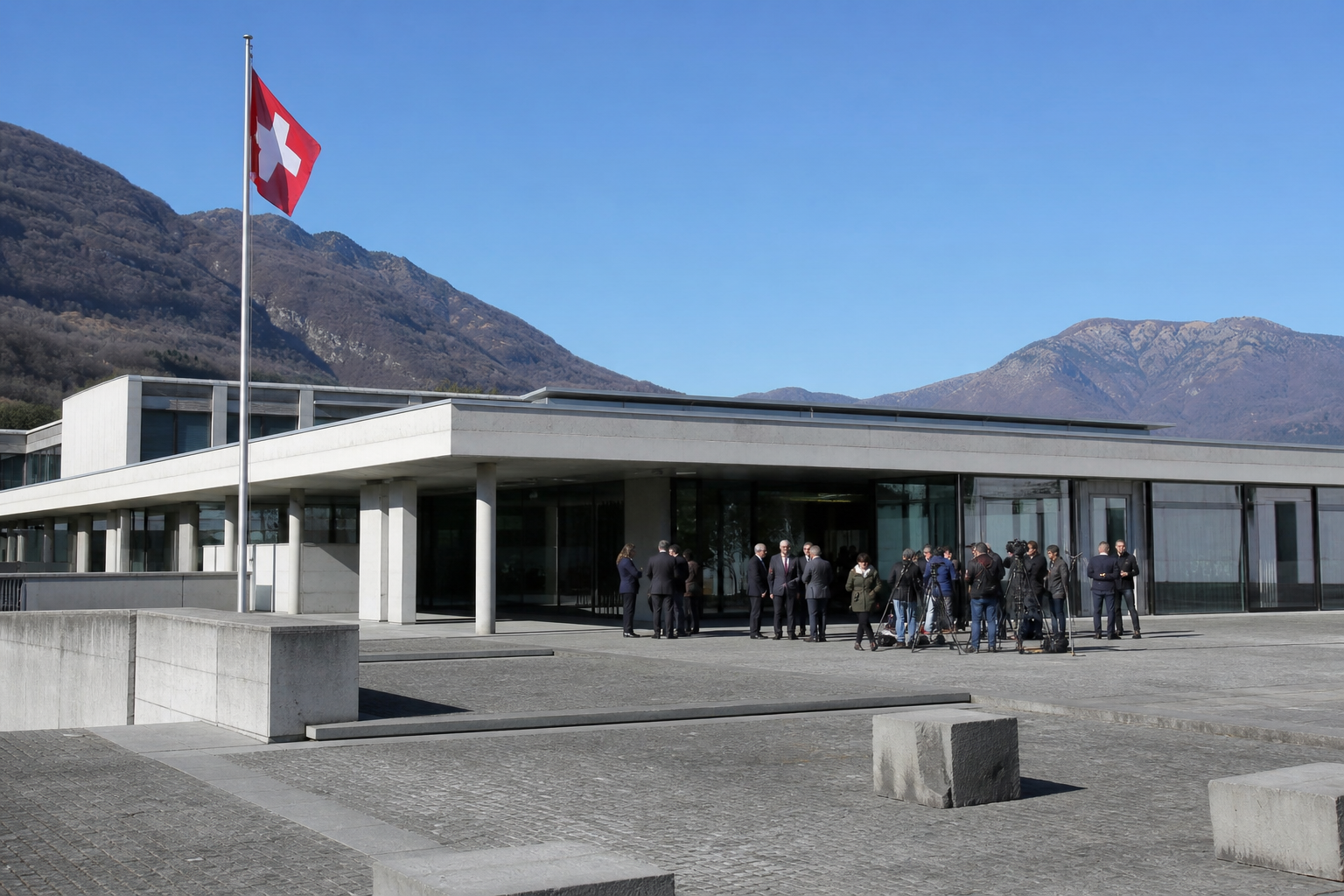
BELLINZONA. The Federal Criminal Court began hearing on Monday what prosecutors describe as a case of the ‘Ndrangheta not visiting Switzerland but residing in it. A 59 year old Italian, long settled in the canton of Aargau, stands accused of serving as the logistical and financial base of the Anello-Fruci clan, one of the Calabrian organisation’s established families, for nearly two decades.
The indictment from the Office of the Attorney General covers the period from at least early 2001 to July 2020. In it, the defendant is alleged to have acted as the clan’s contact person in Switzerland, maintaining close relations with its leadership and placing himself, and people close to him, at their disposal for legal and illegal ends alike.
The alleged services were practical. He is accused of acting as an intermediary in the import of cocaine and hashish from Italy and their sale across several cantons, of promoting the illegal trade in weapons and ammunition, and of recruiting others to the work. Prosecutors say he attended at least one ‘Ndrangheta meeting and misled Swiss administrative authorities so that a clan member could settle in the country.
The money followed a well-worn path south. Between 2003 and 2020 the defendant is alleged to have accumulated at least CHF 1.3 million in cash, exchanged it in installments in Ticino, and smuggled it into Italy by air and by road, where it flowed, in the prosecution’s account, directly into the coffers of the Calabrian leadership. In at least one instance he is accused of trying to pass a counterfeit banknote originating from the Naples region.
What distinguishes the indictment from an ordinary trafficking file is the allegation of method. Prosecutors say the defendant used the mafia method: conduct marked by domination and psychological coercion, exploiting the intimidating power of an organisation capable of the gravest crimes, above all in the collection of debts. Restaurants and public establishments in various cantons were allegedly run through frontmen, generating both income and cover.
The accused was arrested in April 2024 and has been in custody since. The Anello-Fruci clan’s existence and structure have been confirmed by convictions in Italy, a point the prosecution will lean on as it asks the Bellinzona judges to see a single organisation operating across a border rather than a series of disconnected local offences.
The defence, with at least eight days of hearings ahead, is expected to challenge precisely that framing: the meetings, the money and the restaurants presented as separate stories, each falling short of the criminal organisation charge that sits at the top of the indictment.
For Swiss justice the case carries history. The country has been accused before, above all by Italian investigators, of treating mafia presence as an Italian problem that happens to have a Swiss address. The files of the past twenty years tell a different story: clans investing, laundering and settling in the plateau cantons while the legal instruments lagged behind the reality.
Whatever the verdict, the opening day already said something prosecutors have wanted said in open court for years: Switzerland was not a place to hide from the clan. It was a place to work for it.