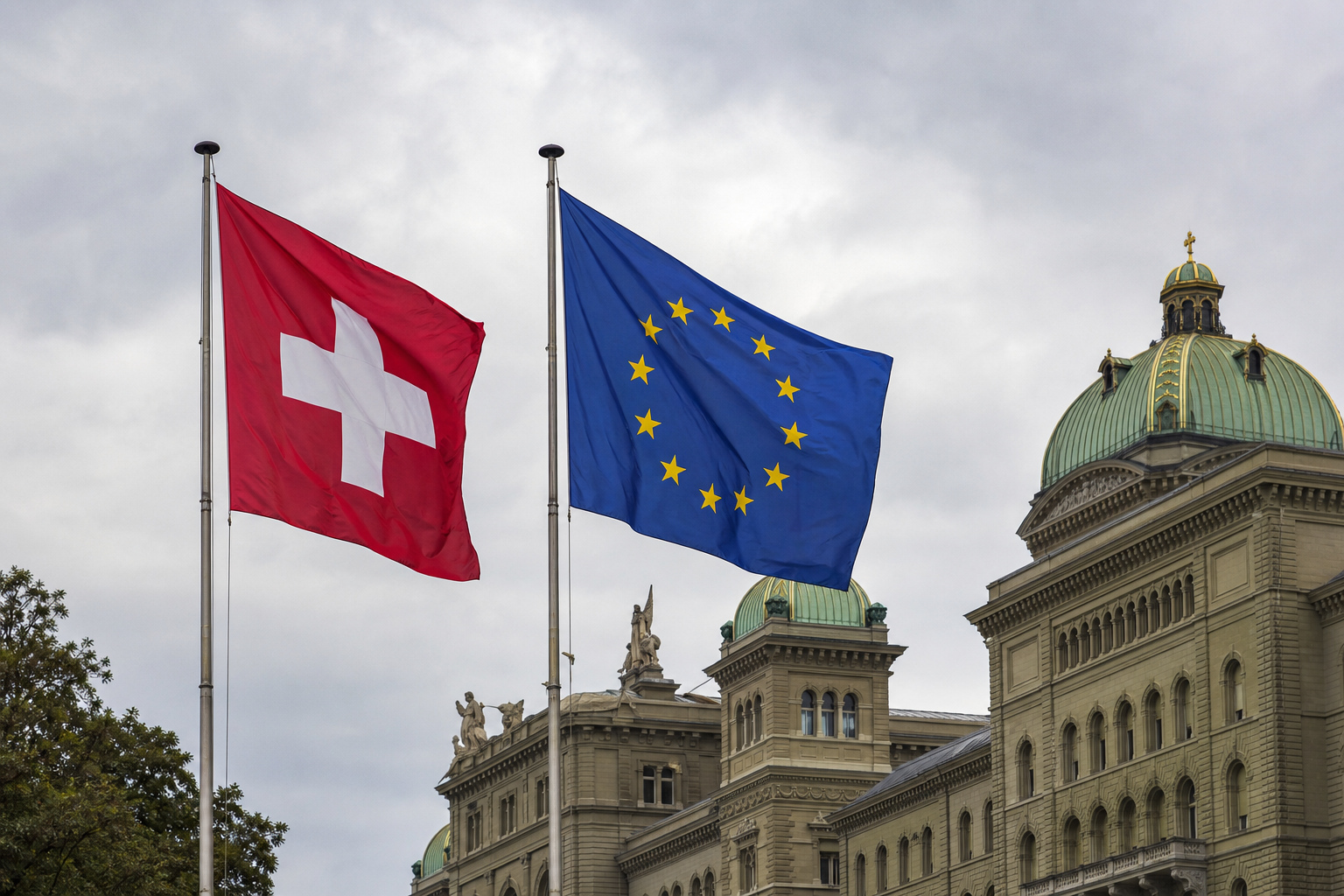
BERN. The Federal Council has recommended that voters reject the Kompass initiative, a constitutional proposal that would require a double majority of the people and the cantons for a wider class of international treaties. The formal position, adopted on 12 August, opens a domestic fight with direct consequences for the new package of agreements with the European Union.
Kompass would raise the approval threshold for treaties that transfer competences or create lasting obligations. Today, many such texts can be accepted by a simple majority of voters, or in some cases by Parliament alone. A double majority, the same hurdle that already applies to constitutional amendments, would give small cantons a veto over deals that a majority of the electorate might still want.
The government argues that the existing rules already protect sovereignty. Treaties of major importance can be put to a referendum, and the constitution already requires a double majority when competences are transferred in a fundamental way. Widening that requirement, ministers say, would make Swiss foreign policy slower and less predictable without adding meaningful democratic control.
The timing is not accidental. Parliament is still considering the Bilaterals III package with Brussels, the set of agreements intended to stabilise market access after years of strained relations. The Kompass text has not blocked that package, but it has become a vehicle for those who want a higher bar before Switzerland binds itself more closely to EU law.
The initiative is separate from the neutrality proposal on the 27 September ballot. Both concern Switzerland’s relationship with the outside world, yet they alter different legal questions. Neutrality is about military alliances and sanctions. Kompass is about how treaties are approved. Campaigners on the right have been careful to keep the two fights distinct, even as they draw on overlapping anxieties about sovereignty.
Business groups have lined up with the Federal Council. Economiesuisse and the machine industry association warn that a double majority for commercial treaties would add years of uncertainty to every negotiation with Brussels, and that investors already price Swiss EU relations as a risk. Farmers’ organisations and sections of the Swiss People’s Party, by contrast, see Kompass as a necessary brake on what they call creeping alignment.
Cantonal governments are split along familiar lines. Urban cantons that live from exports and international organisations fear a tool that rural cantons could use to sink treaties. Alpine and inner Swiss governments reply that federalism means nothing if the small cantons cannot stop a deal that rearranges their legal order.
For Brussels, the essential negotiation may be substantially complete. The uncertainty now lies inside Switzerland’s constitutional system. Diplomats in the EU quarter have taken to asking not what Bern has agreed, but how Bern will be allowed to agree it.
Parliament must still scrutinise both the initiative and the EU agreements. Voters are expected to have a final say later in the process, on a timetable that will not be settled this autumn. The Federal Council’s recommendation brings the government formally into the campaign against Kompass. It does not decide the initiative’s fate.
That is what makes the proposal consequential. It could alter not the content of a single agreement, but the approval threshold for a category of international commitments, including those that define Switzerland’s economic relationship with its largest trading partner. The fight over Kompass is, in that sense, a fight over how hard it should be for Switzerland to say yes.