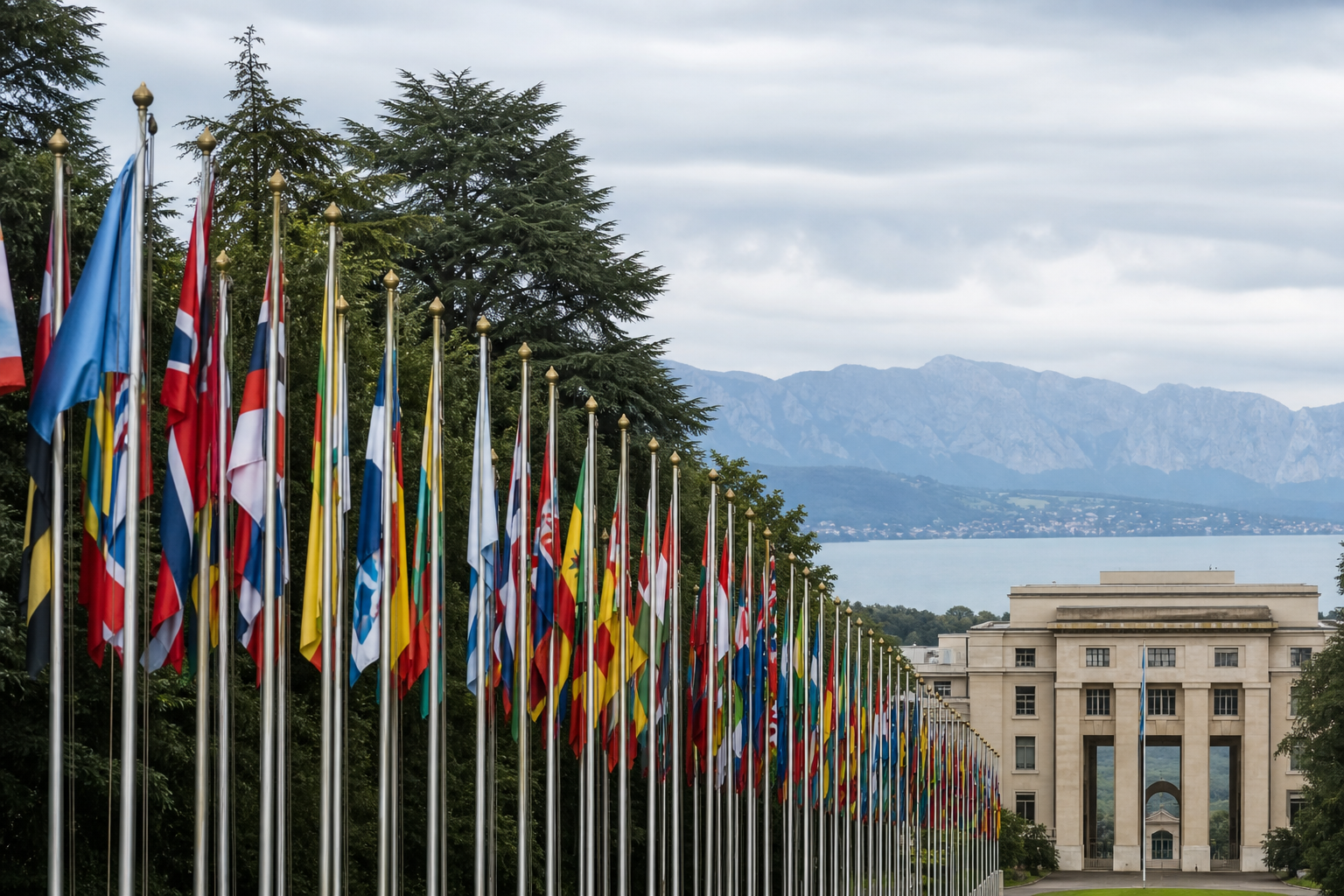
GENEVA. The marble corridors of the Palais des Nations have grown quieter this year, as the United Nations and its sister agencies absorb the deepest round of budget reductions in more than a decade. Hiring freezes, shortened conference calendars and rationed interpretation have become the new grammar of International Geneva, the lakeside district that has styled itself for a century as the world's meeting room. Delegates who once queued for accreditation badges each September now find committee rooms dark for whole weeks at a time.
The retrenchment has been visible since spring, when several large contributors confirmed reductions in both assessed and voluntary funding. The UN Office at Geneva has trimmed its operating budget by roughly 12 per cent, while the World Health Organization, the International Labour Organization and the World Trade Organization have each announced savings programmes touching staffing, travel and building maintenance. Vacancy notices have been withdrawn, and two specialised agencies circulated redundancy plans to staff over the summer.
The pressures have been accumulating for years. Arrears from major donors have widened, the post-pandemic surge in humanitarian appeals has collided with donor fatigue, and the strength of the Swiss franc has steadily raised the local cost of every dollar, euro or yen the secretariats receive. Geneva's institutions are largely paid in weakening currencies but spend in one of the world's strongest, a mismatch that compounds quietly every quarter.
For the canton and the ville of Geneva, the cuts land on an economy unusually exposed to multilateralism. Officials reckon the international sector supports more than 33,000 jobs in the canton, from interpreters and security contractors to hoteliers and private schools. The Conseil d'Etat has convened a working group with the commune to model a decade in which the sector shrinks by as much as a fifth, and to ask what that would mean for everything from tram lines to international school places.
The canton has signalled that it will not try to replace lost conference business with public money. Instead it intends to accelerate land releases around the CICG conference centre, court standards bodies and life-science tenants for the district's office stock, and press Bern to defend the federal host-state services, from residence permits to security screening, that make Geneva attractive in the first place. Office vacancy in the district has already begun to edge upward.
Reactions among the agencies have been pragmatic rather than alarmist. Several executive heads privately welcome the discipline of planning for less after years of budgets deferred by crisis diplomacy. Staff unions, by contrast, warn that short-term contracts and induced early retirements are hollowing out precisely the institutional memory that Geneva sells to the world. Both readings agree on a single point: the expansion years are over.
The arithmetic behind the anxiety is stark. Federal host-state contributions, cantonal spending on security and infrastructure, and communal services together amount to several hundred million francs a year, a figure local officials defend as seed capital rather than subsidy. The return, they argue, is measured in the tens of billions the international ecosystem adds to Swiss output, and in a form of influence that cannot be bought outright.
“You do not budget for a city's vocation the way you budget for a single fiscal year,” said a senior Swiss diplomat involved in the host-state file. “The real question is whether the Geneva of 2035 still holds the density of institutions that makes ministers book flights.”
Critics of the old model see opportunity in the squeeze. Smaller states have long complained that Geneva's costs exclude their diplomats from full participation, and several secretariats are quietly testing hybrid formats that let delegates join from regional hubs. One agency has already moved a flagship meeting to Bangkok, citing hotel rates alone. Should that habit harden, it could erode the very footfall the canton is trying to protect.
The next test arrives in autumn, when the UN's programme budget returns to committee and Geneva learns whether the cuts mark a trough or a new baseline. The canton's working group is due to present its strategy to the Grand Council before the end of the year, including revised projections for office occupancy, school enrolment and the conference calendar through 2035.
For Swiss foreign policy, the stakes exceed the local labour market. Bern has invested heavily in presenting Geneva as the operational heart of its humanitarian brand and its good offices, and a diminished district would narrow that stage. Officials in the canton and the capital alike insist the correct response is adaptation rather than nostalgia. Even a leaner multilateralism still needs a room where adversaries can meet, and Geneva means to keep that room ready.