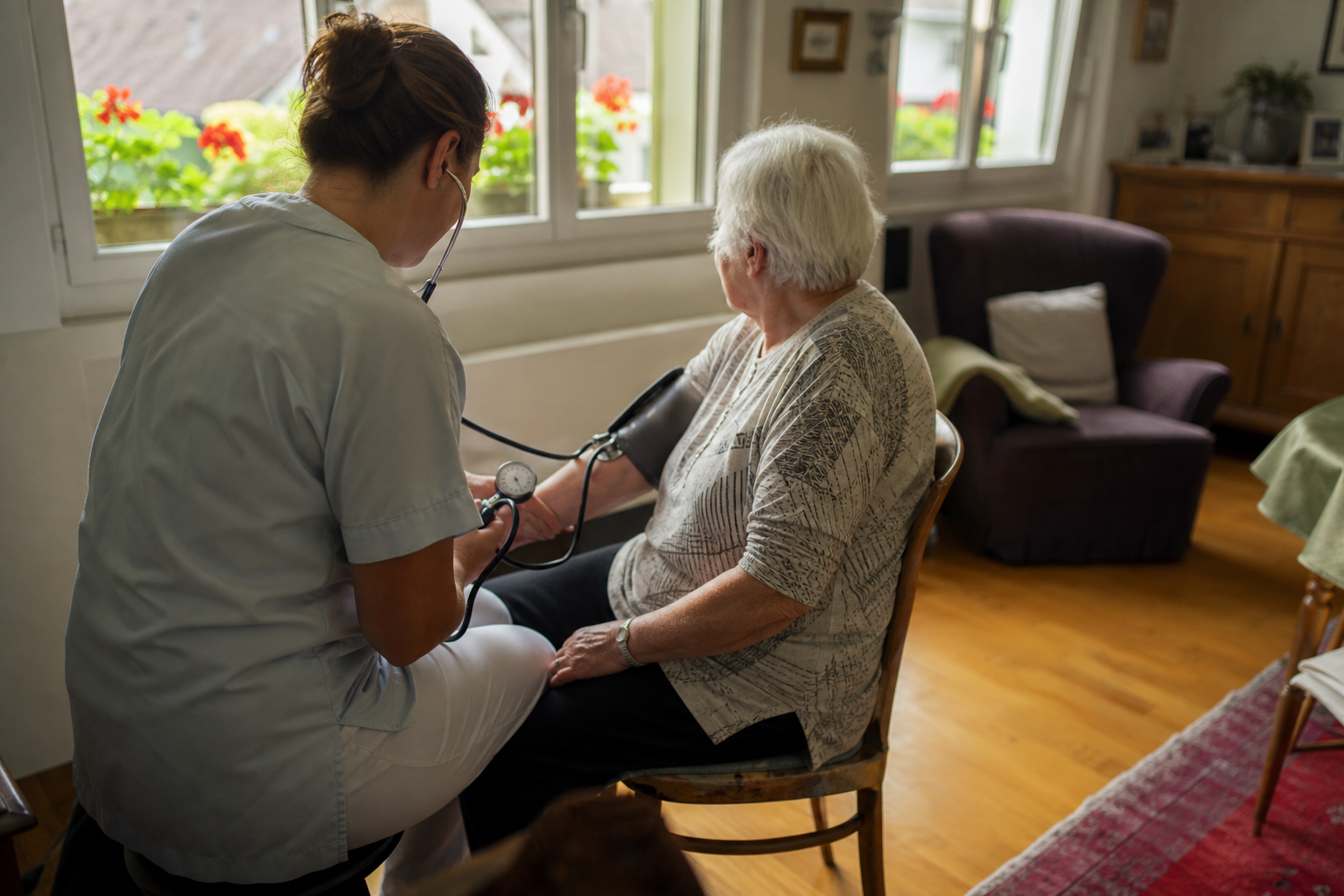
BERN. The average cost of compulsory health insurance per person in Switzerland rose to 4,834 francs over the past twelve months, the Federal Office of Public Health reported in mid August, 21 francs more than a year earlier. The fastest increases were not in hospital wards but in care delivered at home and in therapy rooms: Spitex home nursing jumped 14.9 per cent, psychotherapy 10.9 per cent and physiotherapy 7.2 per cent.
Outpatient medical treatment remains the largest single item, at 1,101 francs per person, up 73 francs on the year. Dispensing of medicines cost 913 francs, and inpatient hospital care 899 francs, each up 28 francs. Outpatient hospital treatment fell on paper by 150 francs to 807 francs, a drop the office attributed to billing delays rather than a genuine decline in activity.
The figures arrive as households wait for the 2027 premium announcement, due from the Federal Office of Public Health in the autumn. Comparison site Comparis has already projected an average rise of 3.7 per cent next year. That would be smaller than the 4.4 per cent increase that took effect in 2026, when the average adult premium reached 393.30 francs a month, but it would still be the fourth consecutive year of above inflation growth.
Home care’s surge reflects a policy that both the Confederation and the cantons have encouraged: shifting patients out of hospitals and into Spitex services and family settings. The strategy eases pressure on beds. It does not, on this evidence, ease pressure on the premium. When more care is delivered at the kitchen table, the kitchen table becomes a cost centre.
Cantonal differences remain wide. Ticino recorded the steepest premium rise in 2026, at 7.1 per cent. Zug, which reimburses 99 per cent of inpatient hospital costs to residents, saw premiums fall by 14.7 per cent, a reminder that cantonal hospital financing still decides what households pay. Zurich, Geneva and Basel-Stadt continue to sit at the expensive end of the scale, reflecting denser specialist networks and higher hospital tariffs.
A Comparis study, reported this month, put a hard number on the value of switching insurer. A resident of Basel-Stadt who had moved from the most expensive to the cheapest basic policy in January 2016 would have saved about 38,436 francs over ten years. The equivalent figures were 37,752 francs in Geneva and 35,517 francs in Zurich. The statutory benefits are identical. The prices are not.
Insurers point to an ageing population, longer lives and new treatments, the same drivers Federal Councillor Elisabeth Baume-Schneider cited when she announced the 4.4 per cent rise for 2026. Consumer groups reply that fragmentation among more than fifty insurers and a payment system that still rewards volume keep the bill growing even when policy makers talk of containment.
Parliament returns to the file in the autumn session, with cost targets, generic reference pricing and a larger cantonal contribution to premium reductions all on the table. None of those measures would reverse the 14.9 per cent jump in home care this year. They might, if they pass, slow the next one.
For households the practical steps have not changed. The premium letter arrives in October, switching is possible until the end of November, and the federal comparison portal remains the fastest way to see whether a cheaper insurer covers the same canton. Checking cantonal subsidy eligibility is still the step most families skip.
The fastest growing bill in Swiss health care is now the one paid at the front door. Until the incentives that produced that shift are aligned with the premiums that fund it, the autumn letter will keep delivering the same news in a slightly larger envelope.