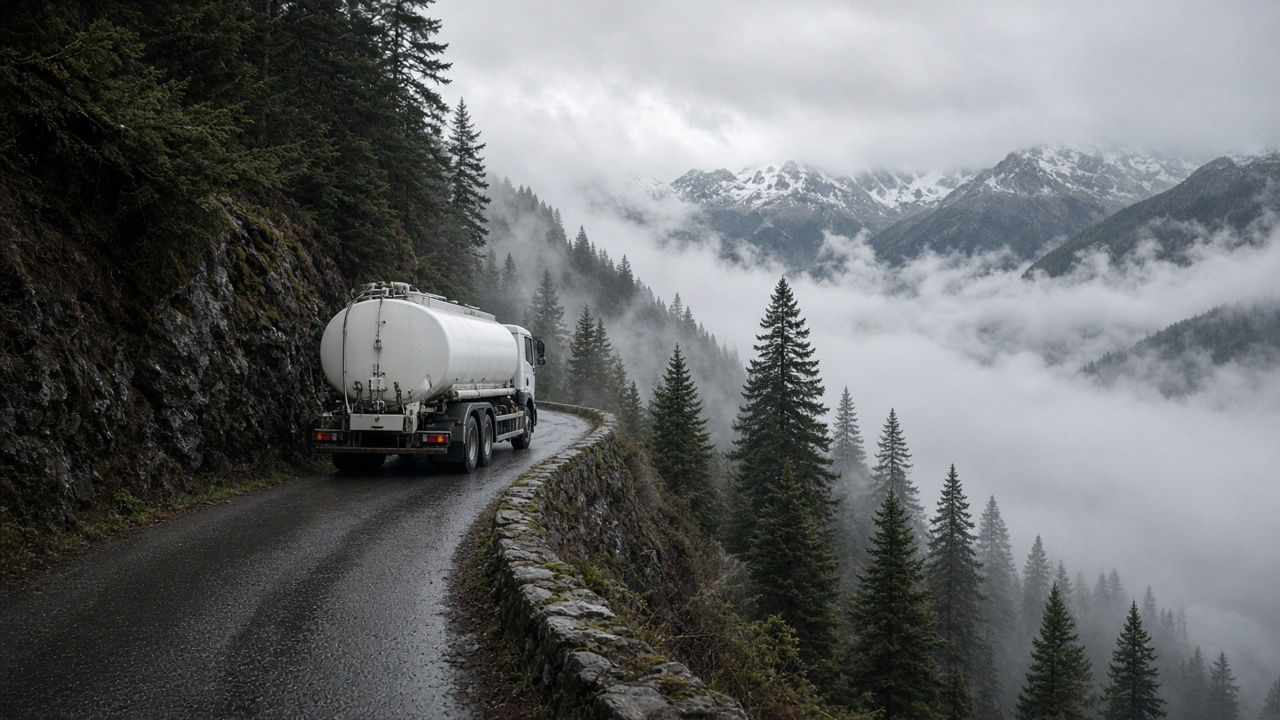
CHUR. Rain this week has not refilled the groundwater that some Swiss communes actually pump. SRF reported on Wednesday morning that shortages are still forcing emergency measures, including in places where the forecast is wet. On Tuesday the Graubünden commune of Domleschg trucked drinking water up to the district of Feldis, to build a reserve for the coming weeks. On Monday, Hochdorf in Lucerne banned car washing with tap water and said its groundwater was the lowest since measurements there began.
Jana von Freyberg, a hydrologist at the Federal Office for the Environment, told SRF the apparent contradiction is about soil, not about the rain gauge. The ground has to be saturated before water can move through it and reach the aquifer. That lag is measured in weeks, and sometimes in months. She said the picture is not the same everywhere, but that some monitoring sites are at lows never observed before. More rain, for a long stretch, is what recovery needs.
Water at depth, and pumps that cannot reach it
Von Freyberg also drew a line that matters for anyone reading a ban as a sign the country has run out. “Despite the fact that some groundwater levels are low, there is still enough water at depth. The question is only whether that water is accessible.” In several communes the water table has dropped so far that pumps are close to sucking air. The shortage on the surface is an engineering problem sitting on top of a geological one.
Christoph Mahr, groundwater specialist for canton Aargau, said the reserves along the large rivers are a different system. They are deep, and months of drought barely move them. His practical advice is to link networks, take water from those valley floors and send it up the side valleys. That needs pipes, agreements and neighbouring utilities that can spare the volume. He said that cooperation is not yet good everywhere. Hochdorf, Römerswil and Rain will restrict drinking water from Saturday, for up to three months. An emergency pipe can move water. It does not remake an aquifer.
The next dry summer is the deadline
The lesson Mahr wants drawn from this summer is unglamorous. Communes that have not joined a wider supply should do it before the next dry year, which he treats as certain rather than as a risk on a slide. Wednesday’s rain, and the snow sitting on the Alps, will help rivers first. Households in Feldis are drinking water that arrived by truck. Households in the Seetal are about to be told which uses of the tap are no longer allowed. Both are answers to the same delay: precipitation is at the surface, and the wells are still waiting.