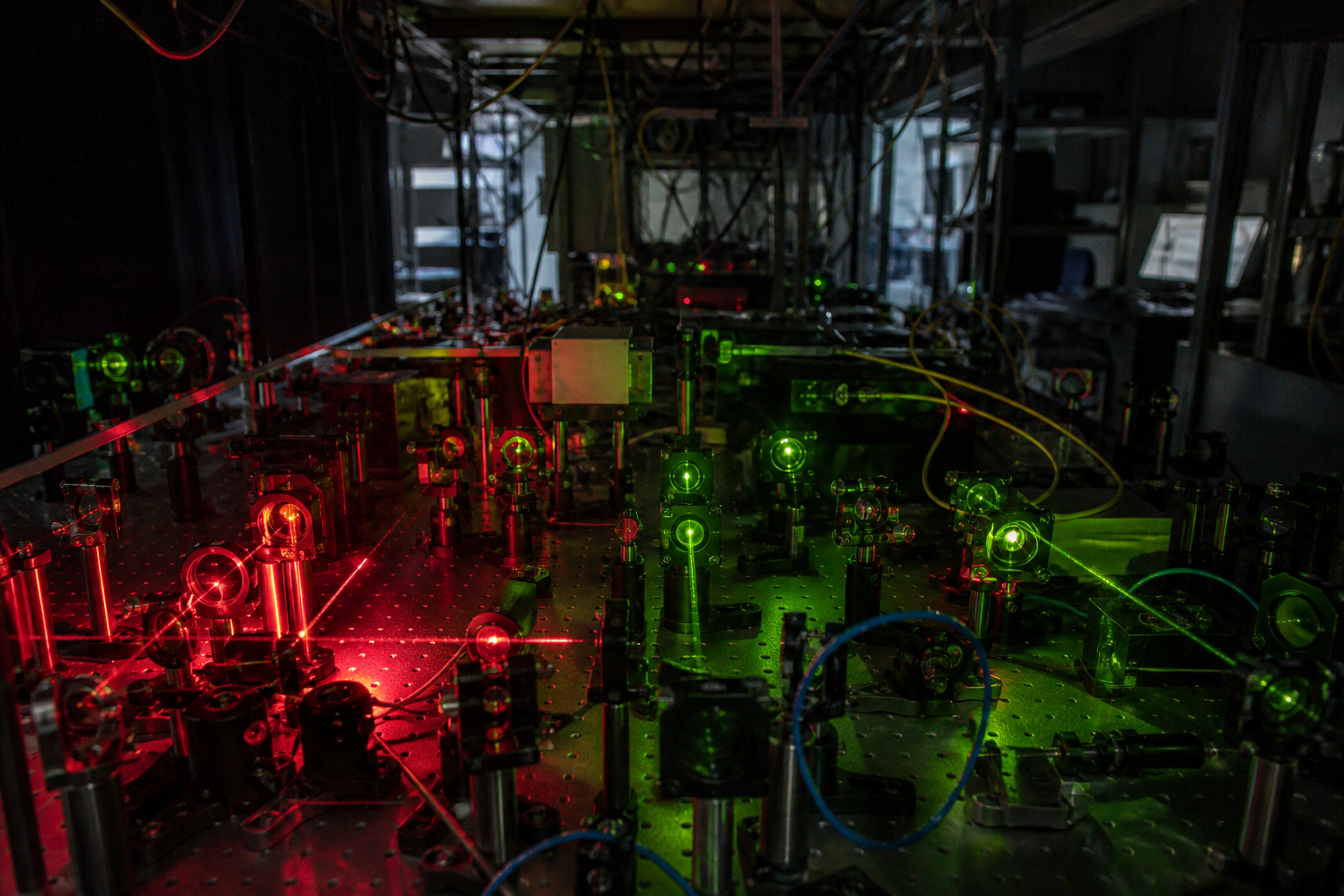
ZURICH. A neutrino detector installed deep inside the Gotthard massif has reported its first scientific results, delivering the most sensitive measurement yet made in Switzerland of the faint particles that stream through the Earth in their trillions each second. The experiment, housed in a cavern off the Gotthard road tunnel's service infrastructure, has completed its first full year of data taking.
The first result concerns neutrinos produced by cosmic rays striking the atmosphere, a background rain that physicists must understand precisely before hunting rarer signals. The detector measured the flux of these atmospheric neutrinos across a 2,000-metre depth of rock with an accuracy comparable to the world's largest dedicated instruments.
Neutrinos were proposed in 1930 by Wolfgang Pauli, then working in Zurich, as a bookkeeping device to rescue the conservation of energy in radioactive decay. He feared the particle would never be detected; it was found in 1956, and it has since earned four Nobel prizes. The Gotthard result is a small but genuine addition to that lineage, and a Swiss homecoming of sorts.
The detector is a tank of ultrapure water lined with photomultiplier tubes, light sensors so sensitive they can register a single photon. When a neutrino, very rarely, collides with an atomic nucleus in the water, the collision produces a charged particle that emits a cone of bluish light, and the pattern of tubes recording that light reveals the neutrino's direction and energy.
The measurement matters beyond Switzerland because atmospheric neutrinos oscillate, meaning they change identity as they travel, and that oscillation is the strongest evidence that neutrinos have mass. Precise flux measurements at European depths feed directly into global analyses that determine the neutrino mass hierarchy, one of the open questions in particle physics.
The experiment is a collaboration between the University of Zurich, the University of Bern and the Paul Scherrer Institute, with the rock laboratory made available by the federal roads office. Funding came from the Swiss National Science Foundation and the participating institutes, at a cost described as modest by the standards of particle physics.
The collaboration is careful about limits. The Gotthard detector is far smaller than the giants in Japan and the Antarctic ice, and it cannot compete on raw event counts. Its niche is the depth and purity of its rock shielding, which filters out other particles so effectively that the neutrino signal stands out with unusual clarity. Access through the tunnel infrastructure also imposes constraints on how large the tank can ever grow.
“We cannot out-build the big laboratories, so we out-hide them,” said the experiment's spokesperson. “A mountain is a wonderful filter.”
The path from first results to broader application runs through detector technology. The photomultiplier readout electronics developed for the experiment are already being adopted by a planned European neutrino observatory, and the data on rock radioactivity are of interest to dark matter searches that demand the same silence.
The detector will now run continuously for at least three more years, accumulating the statistics needed to attempt a measurement of neutrinos from the Sun's core, a harder signal that the first-year data only graze. An upgrade doubling the water volume is under study for 2028.
Underground science has a long Swiss lineage, from cosmic ray stations on the Jungfraujoch to current dark matter searches abroad with Swiss participation. The Gotthard facility gives the country's students something it has lacked: a frontier instrument a short drive from their lecture halls.
Neutrinos pass through the entire Earth as if it were mist, which makes them maddening to catch and precious when caught. Beneath the Gotthard, Switzerland has built itself an ear tuned to the quietest signal in nature, and the first whispers are coming through.