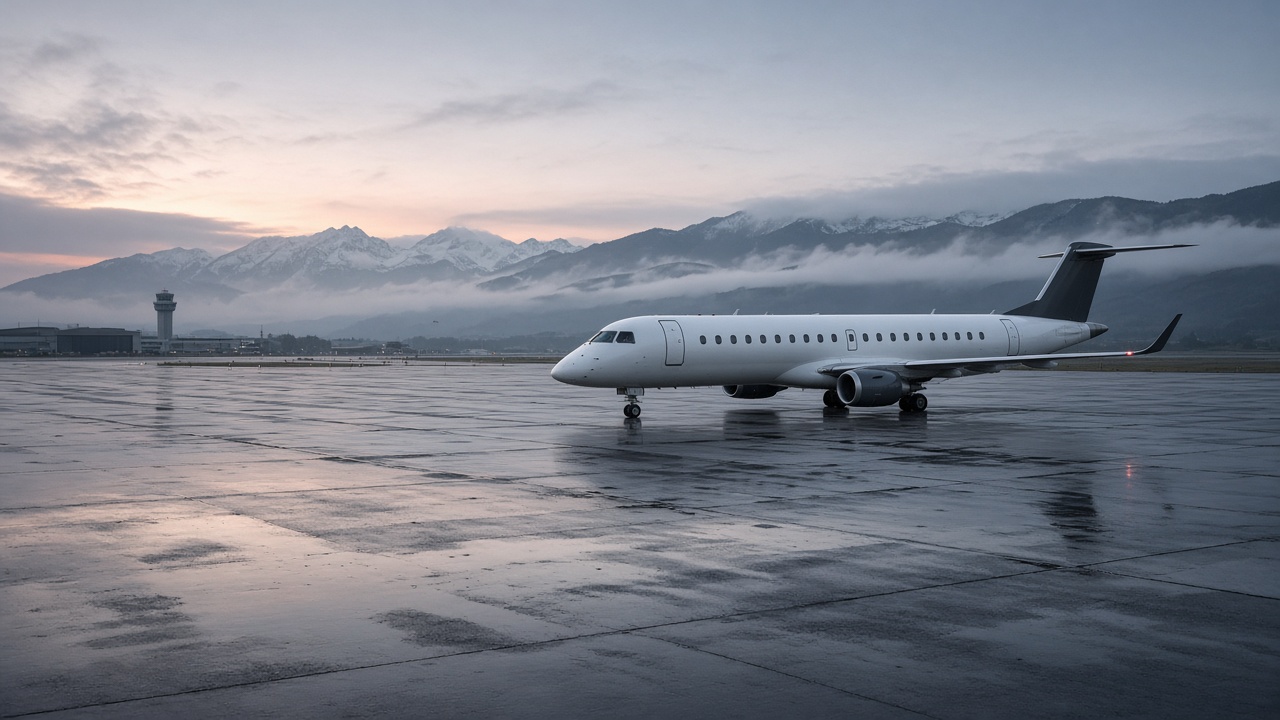
BERN. Parliament will take another look in December at letting foreign airlines fly between Geneva and Lugano, a domestic route SWISS dropped about a decade ago because it did not pay. Two committees have already backed the legal opening. The National Council’s transport committee, on 17 November, voted 16 to 7 to follow the Council of States and to limit the new clause to that one city pair. A minority opposed the change on the grounds that it would compete with the railway and cut against federal climate goals. No carrier has yet said it wants the flights.
The Senate passed the wider aviation-law revision on 16 September by 37 votes to 4. The clause that would let airlines based in the European Union or the European Free Trade Association run scheduled domestic services, for passengers and freight, passed by 28 votes to 12, with two abstentions. Commission speaker Esther Friedli said foreign operators would be an exception: no Swiss company willing to fly the route, the foreign company holding the permits it needs, and no other mode able to meet the demand on equal terms. The House committee has since asked for a tighter text, so that the exception is written as Geneva to Lugano rather than as a general right to fly inside Switzerland.
Five hours, and an empty order book
The push comes from Fabio Regazzi, a Centre senator from Ticino, who brought a parliamentary initiative in July. Train or car between the two cities takes more than five hours. He has argued that this is a question of mobility and of equal access, and that the country’s second and third financial centres should be closer. The chambers of commerce in Geneva and Ticino have called a link essential for their firms. In the September debate, Carlo Sommaruga of the Social Democrats in Geneva said the Ticino economy would gain.
SWISS told RTS that restarting the route is not on its agenda. Ticino advocates in Bern say an appetite can still appear. They also say none has. Alex Farinelli, a Radical-Liberal national councillor, told RTS radio that the Federal Office of Civil Aviation sets the conditions of a concession, which is how labour rules could be kept in line with those of a Swiss carrier. Delphine Klopfenstein Broggini, a Green national councillor from Geneva, doubts the route makes sense in a small country and doubts the population is large enough to support it. Her point is the commercial one that ended the flights in the first place: they were stopped because they lost money, and she does not see what has changed.
Climate, rail, and a December vote
The Green case in the Senate was put by Mathias Zopfi of Glarus, who said a vote for more domestic flying, after this year’s heat, sent the wrong signal. He argued that a year and a half of train travel would match the carbon of a single return flight, and that the time saved against the train was only about half the journey. The House minority that lost 16 to 7 made the same pairing: rail, and the climate targets Bern has already adopted. Those targets were the ones Swiss negotiators were still defending in Antalya this month, at a climate conference that closed without a deal.
December’s session can accept the committee text, widen it back toward the Senate’s version, or reject the opening. What it cannot do is put an aircraft on the timetable. A concession still needs an airline, a slot at both ends, and passengers who will pay for an hour in the air instead of five on the ground. The law, if it passes, removes a prohibition. The route comes back only if someone decides the prohibition was the thing standing in the way.