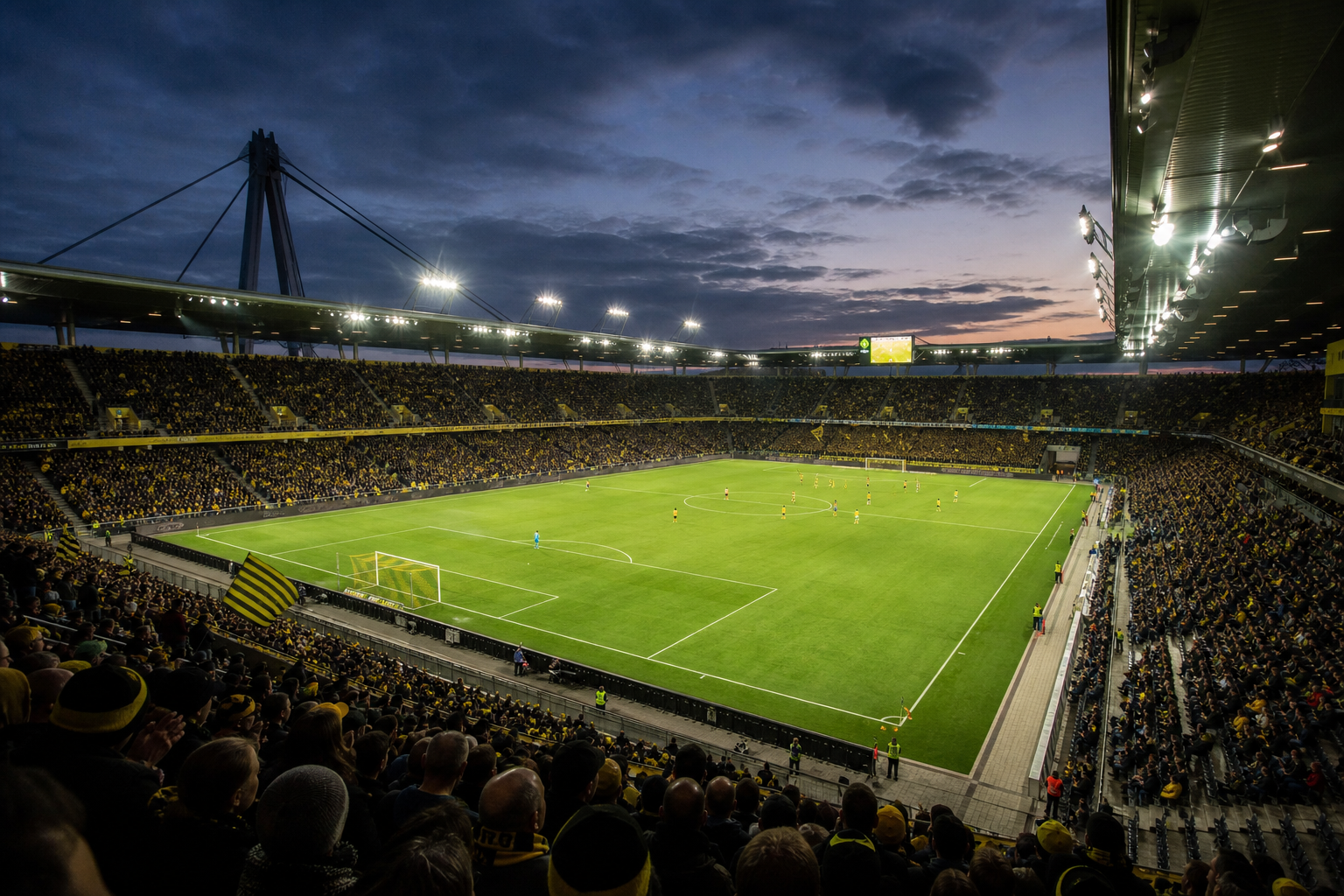
ZURICH. On any given Champions League night this season, the rhythm of matches in England, Germany and Italy is being set by footballers who were passing around cones on the training pitches of Zurich and Basel only a few years ago. Swiss football's longest bet is finally paying out, and the returns are now visible every weekend across Europe's top leagues.
The model rests on the Swiss Football Association's network of performance centres and the professional academies in Basel and Zurich, which take players from the age of twelve and school them through to professional contracts. The emphasis has always been on technical security, tactical intelligence and education alongside football. The results, long promising at youth level, have arrived in the senior game in numbers the country has never seen.
The background is a deliberate choice made in the early 2000s, when the federation concluded that a country of nine million could not outspend its neighbours and would have to out-teach them. Coaching standards were unified, small-sided games were made compulsory at young ages, and academies were required to meet strict criteria on facilities and schooling. The approach was unglamorous, and for years the returns were modest enough to attract scepticism.
The numbers now make impressive reading. Swiss-trained players command combined transfer valuations well into the hundreds of millions of euros, and the export of talent has become one of the Super League's defining business lines. Training compensation and solidarity payments flowing back to Swiss clubs run into the tens of millions of francs each season, money that is largely reinvested in the next generation.
The typical product of the system is a midfielder comfortable in tight spaces, two-footed, positionally disciplined and tactically literate enough to play in several systems. Scouts describe the profile as low risk and high floor: players who may not dominate a highlight reel but rarely lose their team a match. It is a profile shaped by thousands of hours of structured repetition on good pitches with qualified coaches.
Reaction within the federation is one of quiet satisfaction tempered by caution. Technical staff note that producing players is only half the task; keeping the domestic league strong enough to give them first-team football before they leave is the other. Club academy directors in Basel and Zurich speak of a virtuous circle, in which each successful export makes the next intake easier to recruit and to coach.
A senior figure at one of the leading academies said: “We do not set out to build stars, we set out to build professionals, and the stars take care of themselves.” The line has become something of a motto inside the system, repeated to parents who arrive with grander ambitions.
The money picture has changed beyond recognition. Where Swiss clubs once sold their best young players cheaply and early, they now command fees that reflect the system's reputation, with sell-on clauses and appearance bonuses negotiated as standard. The federation takes its share through the mechanisms of the transfer market and channels it back into coach education and facilities.
The next test is already in view. The current under-19 and under-17 groups are regarded by scouts as the deepest Switzerland has produced, and the coming youth tournaments will show whether the production line can sustain its output. Several leading academies have expanded their intake and hired additional staff to cope with demand.
The wider significance for Swiss sport is considerable. Football has shown that a small country can compete with far larger nations by specialising in development rather than acquisition. Other federations, from ice hockey to handball, have studied the model and borrowed elements of it for their own programmes. The model has also become a quiet source of leverage in funding debates, cited whenever sport is asked to justify its public money.
For now, the academies in Basel and Zurich keep their gates open and their standards high. The measure of the model is no longer potential but proof, and the proof plays every week in Europe's biggest stadiums.