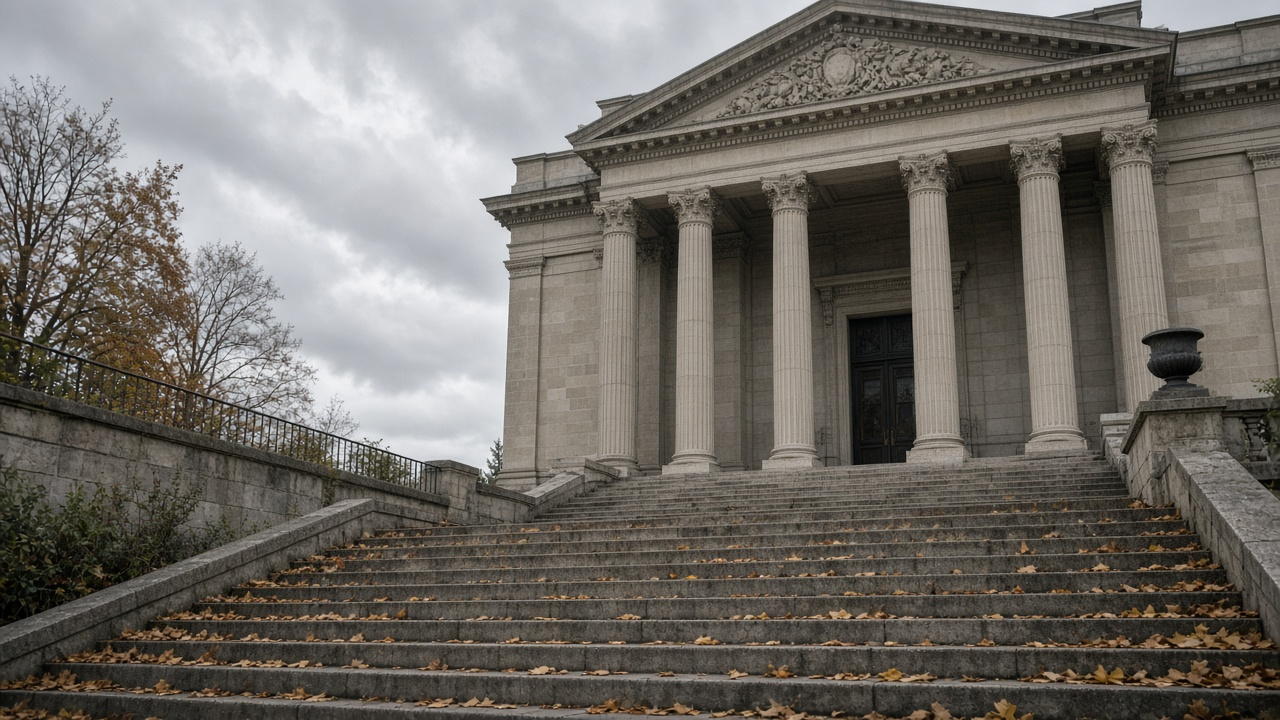
LAUSANNE. The crisis at the country’s highest court has escalated from a private affair into an institutional emergency. The federal judges have voted not to propose their president, François Chaix, for re-election by parliament, and nominated his colleague Thomas Müller in his place. Nothing comparable has happened in the court’s more than 150 year history.
The trigger was the handling of the affair between federal judge Yves Donzallaz and federal judge Beatrice van de Graaf, whose relationship became public in April. A majority of the court was reportedly piqued twice over: at being insufficiently involved in the decisions, and at the conclusion that the relationship would have no consequences. Since then, revision requests have piled up against judgments that either judge helped decide, and the court has assigned them to the second civil law division, sitting for the purpose as a second criminal division.
The week brought three further blows. Donzallaz lost a recusal request. A revision in a Lucerne criminal case failed because a deadline had been missed. And a released court order, itself labelled a cause célèbre, described how Donzallaz had stormed into the office of division president Grégory Bovey to address the procedure, an encounter Bovey cut short. Both judges were given the chance to comment and to see the independent expert report commissioned from Jean-François Meylan and Maya Hertig.
Bern loses patience
In parliament, the revolt has tipped the mood from embarrassment to intervention. Manuela Weichelt, the Green national councillor who chairs the subcommittee supervising the courts, learned of the move against Chaix from the media and calls it plainly: such stories weaken the supreme court and the credibility of the people who sit on it. The talk in the corridors is of moles, bad atmosphere and judges who are professionally competent and personally very difficult.
Twenty minute hearings for lifetime seats
The machinery now under review is modest. Seats on the federal courts are distributed by party proportion, the judiciary commission hears candidates for twenty to forty minutes, and references are collected only from people the candidates themselves name. Leo Müller, the Centre national councillor who presides the commission, confirms that a tighter selection procedure is being examined, including independently gathered references under discretion. Weichelt wants to go further: a serious assessment of professional, linguistic and social competence, and behind it a disciplinary system the federal courts have never had.
The immediate calendar belongs to the court itself. In the winter session, parliament must decide on the re-election of sitting judges, and both Donzallaz and van de Graaf are on the list. What was a story about a relationship is now a story about who guards the guardians, and Lausanne has supplied Bern with the argument it lacked for decades.