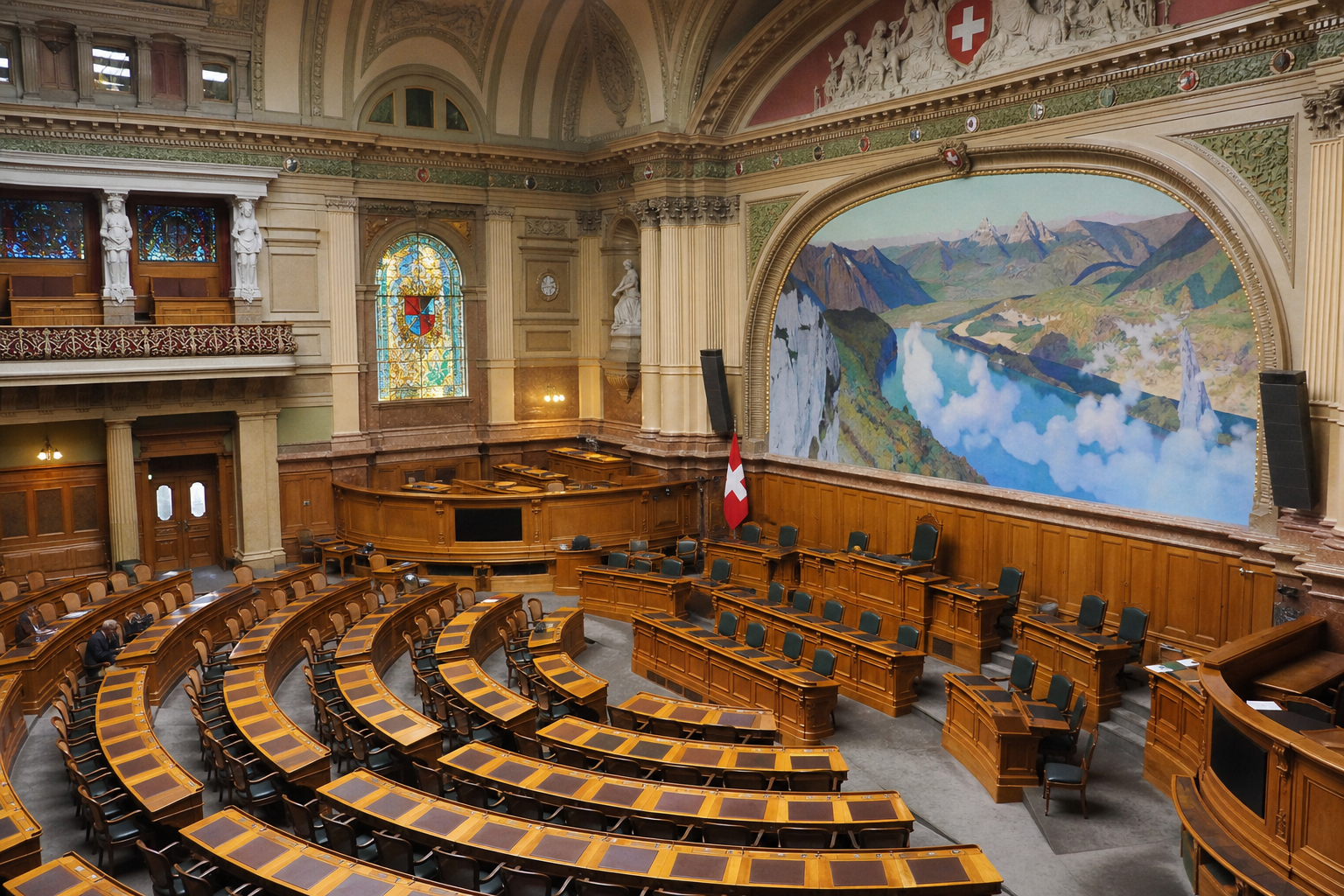
ZURICH. Switzerland votes more often than any country on earth, and on the whole the arrangement works. Yet something has changed in the tempo of the thing. An initiative that once needed years of village-hall argument to gather its signatures can now be launched, financed and submitted between two football seasons. The institution has not changed; the clock around it has.
The proposal here is modest: direct democracy needs a slower lane. Not fewer rights, not higher hurdles, not a vetting committee of the wise, but time. Time is the one ingredient deliberation cannot do without, and it is the one ingredient the modern campaign is designed to eliminate.
The numbers tell the story. The hundred thousand signatures required for a federal initiative were once a serious filter, because gathering them meant volunteers in town squares for month after month. Today professional collectors, paid per signature, can deliver the same total in weeks. The filter still exists on paper; in practice it filters nothing except the willingness to pay.
Campaigns have changed in the same direction. Money has always mattered in Swiss votes, but the modern campaign is a permanent industry of polling, targeting and litigation that never sleeps between ballots. The citizen is asked to decide in an afternoon what that industry has spent two years framing, and the framing, not the facts, is usually what gets decided.
Consider what this does to the questions asked. Complex treaties are reduced to a flag and a slogan, because a slogan is what survives a campaign. The citizen is then blamed for answering simplistically a question that was framed simplistically on purpose. A treaty that took diplomats four years to negotiate is won or lost on a billboard in four weeks.
The strongest objection is that the system has absorbed worse. Voters reject most initiatives, including lavishly funded ones, and the double majority of people and cantons has killed many a clever campaign. If the people keep saying no to nonsense, why repair what is not broken?
The objection is half right. The Swiss voter is a sceptical creature, and long may that remain so. But a system can be robust at the ballot box and still be degraded upstream, in what reaches the ballot and in what condition public argument is in when it gets there.
What the debate gets wrong is the confusion of participation with deliberation. Signing a petition at a folding table outside a supermarket is participation of a kind, but it is not the weighing of arguments that gave the institution its legitimacy. We have kept the rituals and thinned out the substance. The signature has become a transaction, and the argument that was supposed to follow it has become an afterthought.
The cost shows up as fatigue and as hollowing. Turnout drifts downward on technical questions while spiking on identity questions, which is exactly backwards. And parliament, knowing any compromise can be torpedoed by a referendum threat, increasingly drafts law with the campaign in mind rather than the problem.
A slower lane would be simple to build. Extend the collection period, so that volunteer signatures count for more than purchased ones. Require a formal pause, a deliberative phase with a published counter-proposal, before any initiative goes to the people. Give a randomly drawn citizens' panel the right to question the initiators in public, on the record.
None of this touches the right to vote, the right to launch, or the final say of the people. It merely insists that between the launch and the verdict there should be something resembling thought. A system this good is entitled to defend its own preconditions.
The founders of the modern system trusted the citizen with power because they also built in the time to use it well. We have kept the power and sold the time. Buying it back would be the most conservative reform imaginable, and the most radical thing on offer.