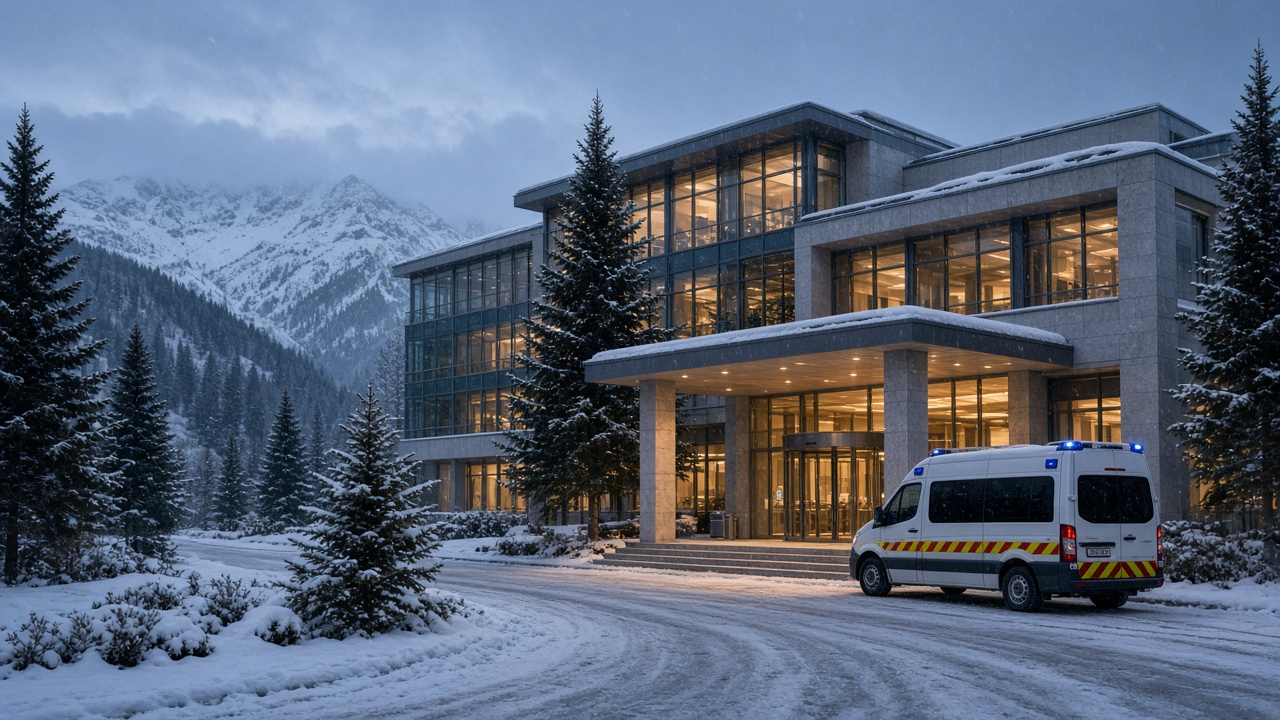
BERN. Switzerland will not ask Italy to repay CHF 1.5 million in hospital bills for 12 people, insured in Italy, who were injured in the Crans-Montana fire and treated here before transfer to Italian hospitals. The Federal Council took the decision on an exceptional basis. President Guy Parmelin has informed the Italian prime minister, Giorgia Meloni.
The fire at the bar Le Constellation, in the early hours of 1 January, killed 41 people and injured more than 100. Six of the dead were Italian. One person insured in Switzerland was treated in Italy. The sum now being waived is the same figure that has sat, unpaid and disputed, in the file since the autumn: CHF 1.5 million.
What the treaty actually says
The ordinary rule is the opposite of a waiver. Under the agreement on the free movement of persons between Switzerland and the European Union, each country in principle covers the cost of care for people insured in its own system, even when the treatment happens on the other side of the border. The Federal Council’s point, set out with the decision, is that the agreement also leaves room for states to depart from that rule. Italy asked for the departure. After several rounds of talks, Bern agreed.
The government’s own wording, carried by AFP, ties the exception to “the scale and repercussions of the tragic fire in Crans-Montana, as well as the support provided by Italy during the disaster”. That is a political sentence as much as a legal one. Italy sent help on the night. Italian families then received Swiss invoices that Rome’s ambassador, Gian Lorenzo Cornado, called “absolutely exorbitant”, and said his country would not pay. The waiver is how that argument ends, for these 12 files, without a court.
An exception that is meant to stay an exception
Nothing in the decision rewrites the treaty for the next tourist, the next ski injury, or the next cross-border patient whose bill is merely large. The Federal Council has been explicit that the step is exceptional. Households in Valais, and insurers in both countries, should not read CHF 1.5 million as a new standing offer. They should read it as a decision about one night, 41 dead, and a dispute that had started to sour a relationship Bern would rather keep practical.
The criminal file is separate, and it is not closed. Seventeen people now stand accused. Jean-Claude Savoy, the former mayor of Chermignon, who co-signed the 2015 operating licence for the bar after its refurbishment, has already been questioned for a third time. Hearings of the bar’s owners are scheduled through November and December. A waived invoice does not narrow that case. It settles who pays for a defined list of Italian patients. It does not settle how the bar was licensed, inspected, or allowed to fill on New Year’s Eve.
What families can and cannot take from Thursday
For the 12 people insured in Italy, the practical result is that Switzerland has dropped the claim. For everyone else injured that night, the bills follow the insurance they actually have. Swiss patients are not part of this waiver. Italian patients who were not in the group of 12 are not automatically inside it either. The government has named a number, a nationality of cover, and a reason. It has not opened a general compensation scheme.
Parmelin’s call to Meloni is the diplomatic half of the same choice. A bill that Rome had already called impossible was becoming the story, in place of the fire. Bern has chosen to take the CHF 1.5 million on the Swiss side and to say, in public, that it is not changing the rule. Both halves of that sentence will be tested the next time a cross-border hospital invoice is merely expensive, rather than tied to a disaster of this scale.