ZURICH. Swiss car insurance is heading for another rise in 2027. Comparis, the comparison service, says premiums climbed 19 per cent between 2021 and 2026, and its survey of the market points to further increases next year. The size will not be the same for every driver or every insurer. The direction, Comparis says, is no longer in doubt.
Three things are pushing the bill. Spare parts cost more. Garages charge more to fit them. Severe weather is producing more claims. None of the three is a one-year spike that a single calm summer would erase. Parts inflation and the electronics in a modern car sit under the premium even in a year with no hail.
What a door costs now
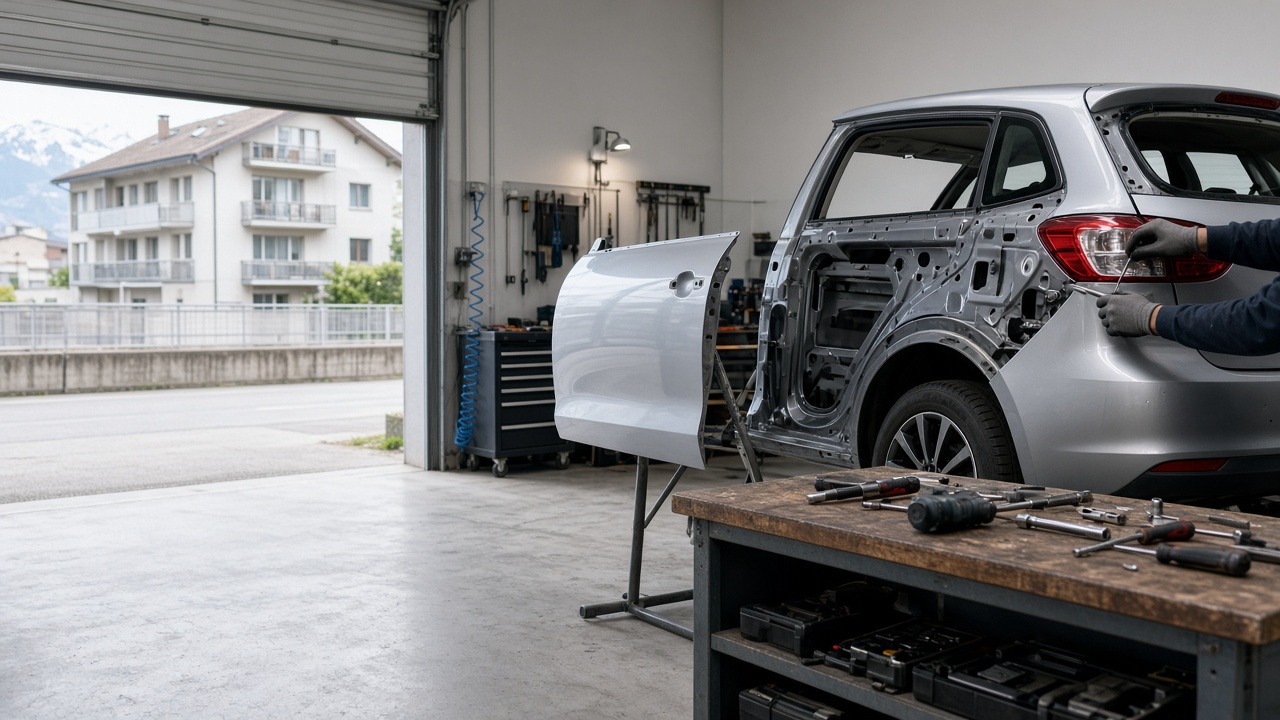
Comparis put numbers on the workshop, not only on the policy. Between 2023 and 2025 the average cost of repairing a rear door rose 46 per cent. Side body panels rose 41 per cent. Front wings rose 32 per cent. Those are the panels a car park, a roundabout or a hailstorm actually hits. A driver who last made a claim in 2022 is pricing the repair against a market that no longer exists.
The sensors are part of the same invoice. A wing that once needed paint now often needs a camera or a radar recalibrated before the car can leave the ramp. Comparis’s point is that the technology sold as safety also lengthens the job. Insurers do not absorb that quietly. They reprice the pool, and the renewal letter is where the pool becomes a household number. October’s inflation, at 1.5 per cent, was the highest in almost three years, led by heating oil, petrol and diesel. Motor insurance is not in that fuel basket. It is a second bill arriving on the same doormat.
Weather claims, and why they linger in the premium
Hail, flooding and falling trees do not hit every canton in the same summer, but the reinsurance behind a Swiss motor book is national. A bad storm season in one region can sit inside the next year’s tariff for drivers who never saw the cloud. Comparis lists severe weather as a standing cause of the rise since 2021, alongside parts and labour, rather than as a single event that has already been paid for.
That is why a quiet winter does not, by itself, promise a cut in 2027. Insurers look at the cost of the claims they are still settling and at the cost of the claims they think the next storm season will bring. The 19 per cent already on the policy is the backward look. The further rise Comparis expects is the forward one. The survey does not publish one national percentage for 2027, and a single figure would be the wrong thing to wait for. The letters will differ.
What to read on the renewal
The practical check is narrower than the headline. Look at the premium, the excess, and whether glass, parking damage and natural hazards are inside the same contract or priced as extras. A higher excess can hold the premium down and still leave a door repair, at the new workshop price, in the household’s own pocket. A cheaper premium that drops hail cover is not a saving in a canton that has just had one.
Shop before the renewal date, not after the direct debit. Comparis is a comparison site, so it has an interest in people comparing, and the survey should be read that way. The repair inflation it cites is still a fact a driver can test: ask a garage what a rear door costs on the car you actually own, and set that next to the premium you are about to accept. If both numbers are up, the 2027 letter is not a surprise. It is the workshop, itemised once a year.