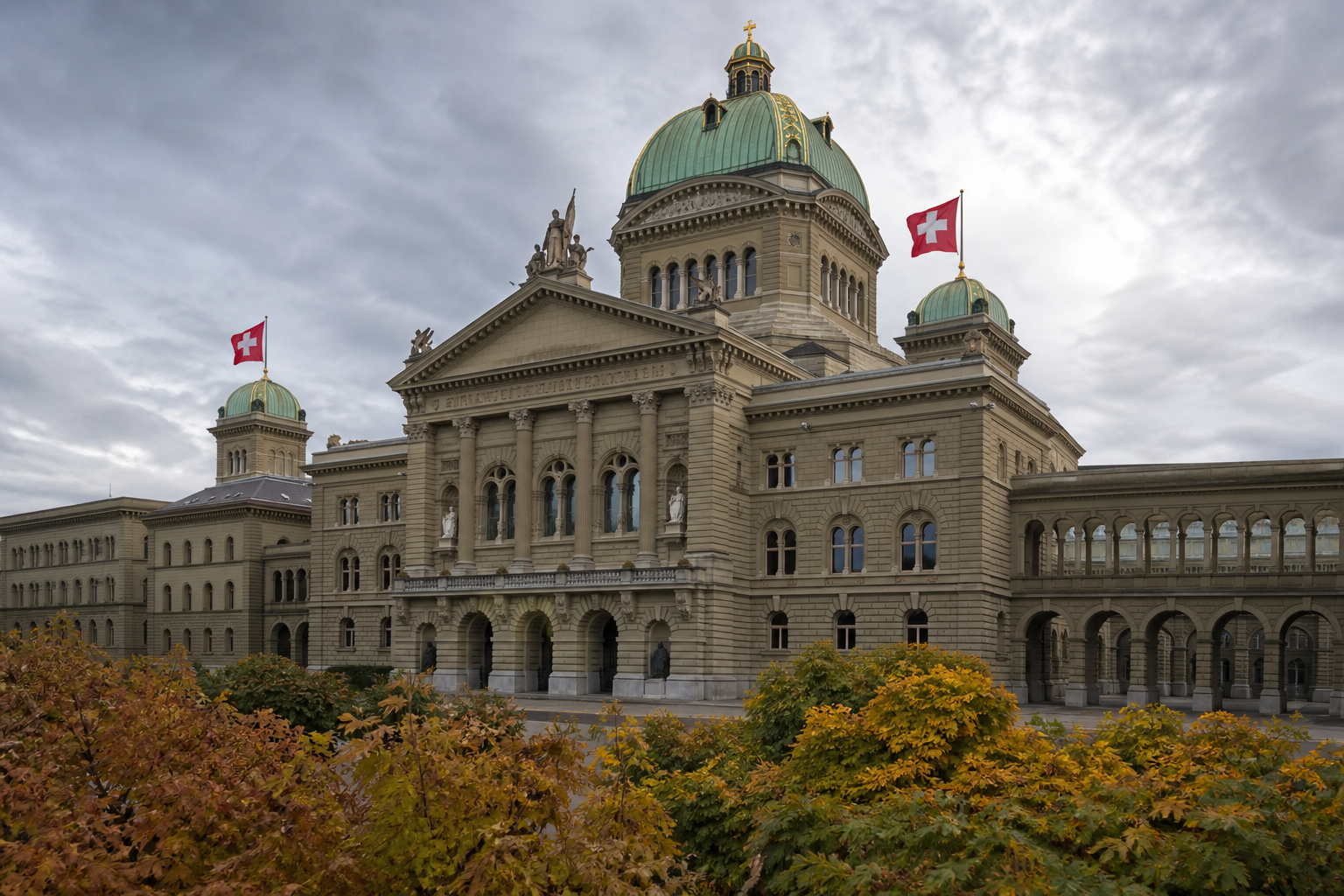
ZURICH. Twice a year, in the squares of Glarus and Appenzell Innerrhoden, the citizens stand in the open air and vote with their hands. It is easy to romanticise the Landsgemeinde, and easy to sneer at it. Both reactions miss what it quietly proves: that political business can be conducted in plain language, in public, at human scale, and finished by lunchtime.
The Bundeshaus cannot become a village square, and should not try. But the habits of the village square, brevity, visibility, budgets expressed in money people recognise, are exactly the habits the federal capital is losing. The loss is showing. It shows in the turnout, in the tone, and in the growing suspicion that the whole production is staged for someone else.
Spend a day at a communal assembly and the contrast stings. The council presents its budget in francs per household. A citizen asks why the road costs what it costs, the council president answers in two sentences, and the vote is taken. No one reads from a party script, because no script survives contact with neighbours.
Now spend a day watching the federal chambers. The speeches are written for the record rather than the room, the questions are planted, the answers are evaded within the rules, and the sums are so large that no one, including most members, can feel them. It is not corruption. It is something more corrosive: theatre that everyone involved knows is theatre.
There is also the matter of time. In the village hall, long speeches die of their own weight, because the audience is standing and the weather is honest. In Bern, length is costless to the speaker and expensive only to the public, which is why there is so much of it.
The professional case for the status quo is real. National government deals with pensions, railways, pandemics and treaties, matters of genuine complexity that village formats cannot hold. The militia parliament already brings citizens into the Bundeshaus, and the committee system, invisible and unglamorous, is where the real scrutiny happens.
Fair enough, as far as it goes. But complexity is an explanation, not an excuse, and it has become a convenient one. The same chambers that cannot explain a budget can certainly complicate one, and the militia ideal is thinning as politics professionalises into a career with a Bern postcode.
What the debate gets wrong is the assumption that the choice is between expertise and the village. The village hall is not anti-expert; it is anti-fog. Its lesson is not that amateurs should run the railways but that those who do should be able to explain a decision standing up, briefly, to people who can see their faces.
The cost of the fog is the slow leak of trust. Turnout slides, cynicism rises, and the space vacated by comprehensible government is filled by the politics of the slogan, which is the one format that needs no explanation at all. The fog is not neutral; it discriminates against everyone without a staff of researchers. A country that cannot follow its own budget will follow anyone with a flag.
The borrowing could be concrete. Publish the federal budget in francs per household alongside the billions. Give citizens' questions a formal, televised slot that ministers must answer in person and briefly. And defend what remains of the militia principle by making it possible, not heroic, for a working citizen to sit in parliament.
None of this would turn Bern into Glarus. It would merely import a standard the country already possesses and has somehow decided is beneath its dignity. The know-how is sitting in the communes, where it has always sat.
The hands go up in the square, and the decision is everyone's. In the Bundeshaus the hands go up too, on schedule, after the speeches no one listens to. The difference is not scale. It is whether the people in the room believe the room is real.