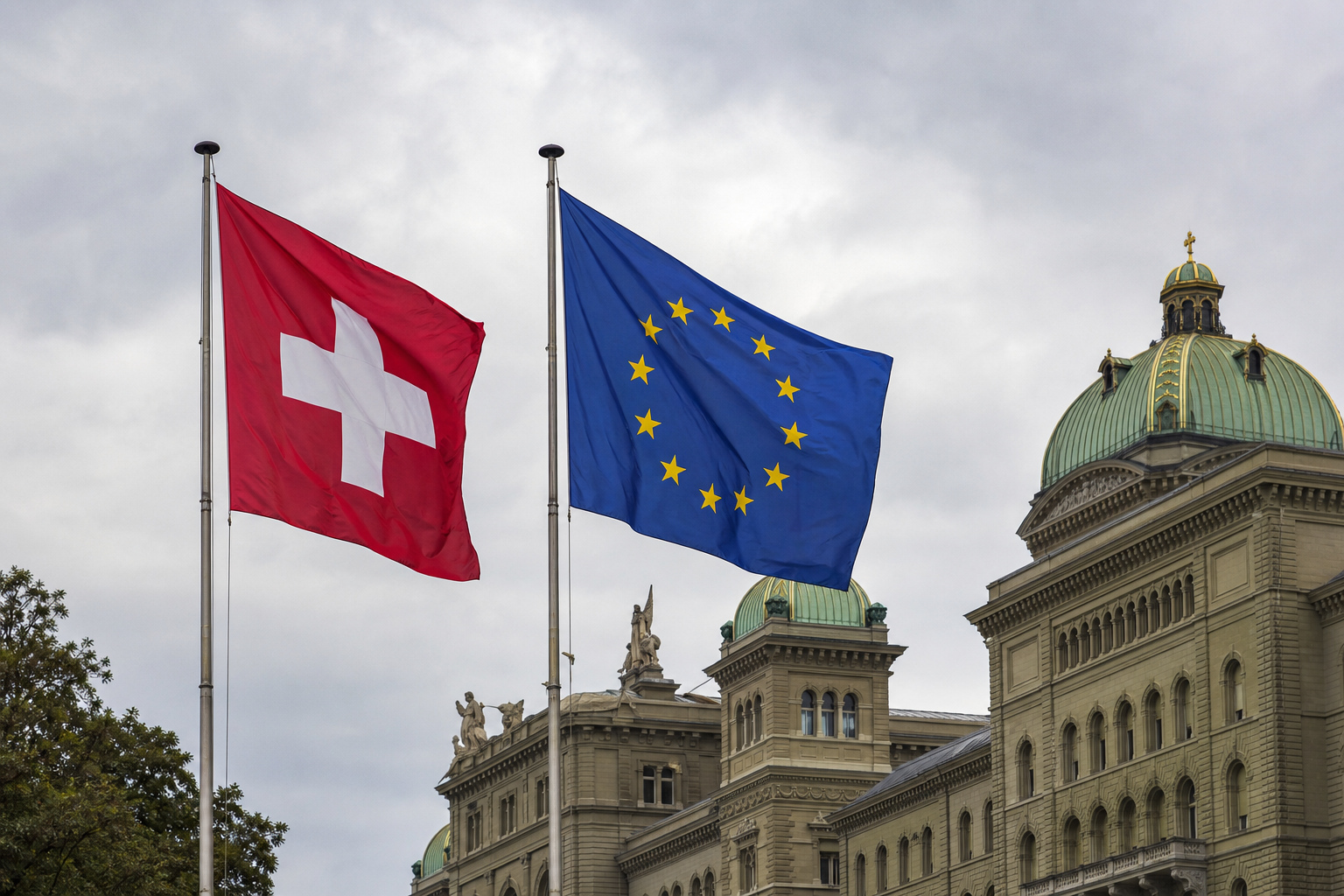
GENEVA. Switzerland will take its seat at the next round of European security talks, ending weeks of public hesitation about how visible a role Bern should play. The Federal Department of Foreign Affairs confirmed the participation in a brief statement, noting that the delegation would be led at senior level and that Switzerland accepted the agenda as circulated. The confirmation followed a Federal Council discussion in which, by Swiss standards, little dissent was audible. In Bern's current vocabulary, even the decision to attend is a policy act.
The round, scheduled for early winter, will convene delegates from across the continent to discuss conventional arms transparency, military incident channels and the revival of confidence-building measures that have lapsed. Working sessions are expected to run for three days, with Switzerland co-facilitating one of the technical groups. Agenda items were pre-cleared in capital-to-capital calls over the summer. The venue, as is customary for this format, will be disclosed only shortly before delegations arrive.
The process has an unglamorous pedigree. It grew out of ministerial conversations held on the margins of earlier summits, when it became clear that existing forums were too paralysed to host even technical discussion. A core group of capitals agreed to try a smaller, quieter format, and Bern was asked to help hold the pen precisely because it belonged to none of the quarrelling blocs. Two earlier rounds produced a modest agreement on military hotlines that officials still cite as proof of concept.
Switzerland's motivation runs deeper than hospitality. The country currently chairs the Organization for Security and Co-operation in Europe, and officials see the talks as a chance to keep the organisation's themes alive while its formal bodies remain gridlocked. The FDFA's security policy division has doubled the staff assigned to the file since spring. There is also self-interest: a frozen European security order is bad for a trading nation whose prosperity assumes predictability.
Reaction from partners has been warm in public and impatient in private. Fellow neutral states welcomed the confirmation, while larger capitals made clear they expect Switzerland to contribute substance, not merely rooms. At home, parties on the right questioned why Bern would lend credibility to a process without conditions on the table, and parties on the left asked why the confirmation had taken so long.
The practical footprint is deliberately small. The delegation will number in the low dozens, supported by a Geneva-based secretariat cell drawing on host-state infrastructure at the Palais des Nations for its preparatory meetings. Interpretation, accreditation and secure lines come under the same host-state arrangements used for UN meetings. Costs are absorbed within the FDFA's existing peace and security budget, which officials describe as modest relative to the file's importance.
“A seat at the table is itself a deliverable for a small state,” said a senior Swiss diplomat, “because the alternative is to read about the architecture afterwards.”
The complications are structural. The parties disagree about what the talks are for: some see a ladder back to arms control, others a channel to prevent accidents, others still a theatre for signalling. One participating state has already threatened to walk out if a particular weapons category is tabled. Switzerland's insistence that the process remain technical has survived, so far, only because no one has yet tested it.
Next comes a preparatory meeting of sherpas, where Bern intends to table proposals on incident-notification protocols, the least political item on the list. A work plan for the coming year is the stated ambition of the winter round; anything beyond that, officials concede, would be a surprise. Success, in Bern's briefing notes, is defined as a date and a chair for the following round.
The significance for Swiss foreign policy is cumulative. Since hosting a high-level peace summit above Lake Lucerne, Bern has sought a role that is more than a venue and less than a mediator, something officials have taken to calling a convening power. These talks are its first sustained test.
Bern is managing expectations with care, aware that security processes measure themselves in decades. The winter round will be judged not on communiques but on whether delegates agree to meet again. A seat kept warm, officials like to say, is a seat that cannot be taken by anyone else. Switzerland's wager is that habits of talking, once rebuilt, become harder to abandon than habits of silence.