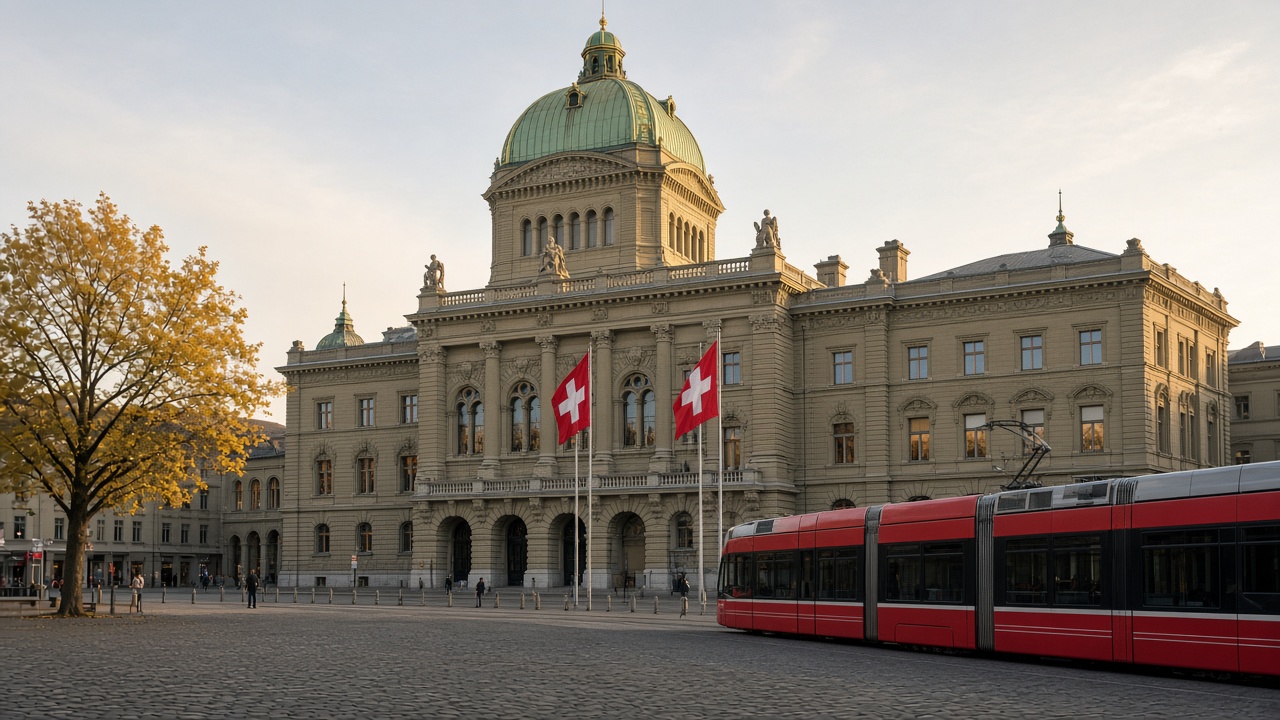
BERN. The Federal Assembly returned to Bern on Monday for a three week autumn session that will decide the shape of Switzerland’s relationship with the European Union for a generation. One file sits above all others: Bilaterals III, the 2,000 page treaty package that the Council of States will debate over three days from 28 September, with three federal councillors expected to attend.
The timing is not accidental, and it is not comfortable. Senators begin their debate on the morning after the 27 September neutrality referendum, a vote Brussels reads as a test of Swiss openness to the outside world. Whatever the country decides on Sunday night will be sitting in the chamber on Monday morning.
What parliament cannot do is change a word of the treaties. The package stabilises five existing agreements and adds new texts on electricity, health and food safety, with the dynamic adoption of EU law, wage protection and immigration safeguards at the core of the dispute. What parliament can do is decide how Switzerland signs, and how voters will be asked: by optional referendum, needing a simple majority, or by mandatory referendum, needing the cantons as well.
The European Parliament’s foreign affairs committee backed the package last week by 53 votes to 3, passing it in minutes and without debate. The full parliament in Strasbourg votes by the end of the year. Bern’s foreign ministry has said Switzerland’s timetable will be set in this chamber, not in Brussels, which is another way of saying the next three weeks are the timetable.
The EU file does not arrive alone. The Senate must also settle how to pay for army rearmament after two of its committees rejected the government’s 0.5 point VAT rise in favour of a 0.2 point levy topped up with budget surpluses. The full chamber takes up the UBS capital bill, where a committee majority wants the bank to cover half the new requirement with reworked AT1 bonds against the government’s all equity plan. Mercosur ratification, delayed since the summer, closes out the trade agenda.
Beneath the legislation runs the campaign. Posters for and against the neutrality initiative cover every hoarding between the Bundesplatz and the station, and several senators are running referendum platforms alongside their committee work. The result of the food security initiative, the second proposal on the ballot, will be read in the farm lobbies as a verdict on how far voters let the state reach into production.
The arithmetic favours the package in both chambers. The centre parties hold the balance in the Council of States, and their committee majorities have been consistent all summer. The National Council, where the People’s Party is strongest, waits for the winter session. Nobody in the Bundeshaus expects a smooth ride; most expect a yes with conditions attached to domestic flanking measures.
Industry groups opened the session with a coordinated appeal for ratification without delay, arguing that electricity market access cannot wait for another political cycle. The People’s Party answered that the calendar proves the package is being rushed through while the country is watching the neutrality campaign. Both statements are true, which is what makes the next three weeks difficult.
The session ends on 2 October. Between now and then, Switzerland votes once, debates its European future for three days and settles how it pays for its army. The treaties cannot be amended. Everything else in this session can, and much of it will be.