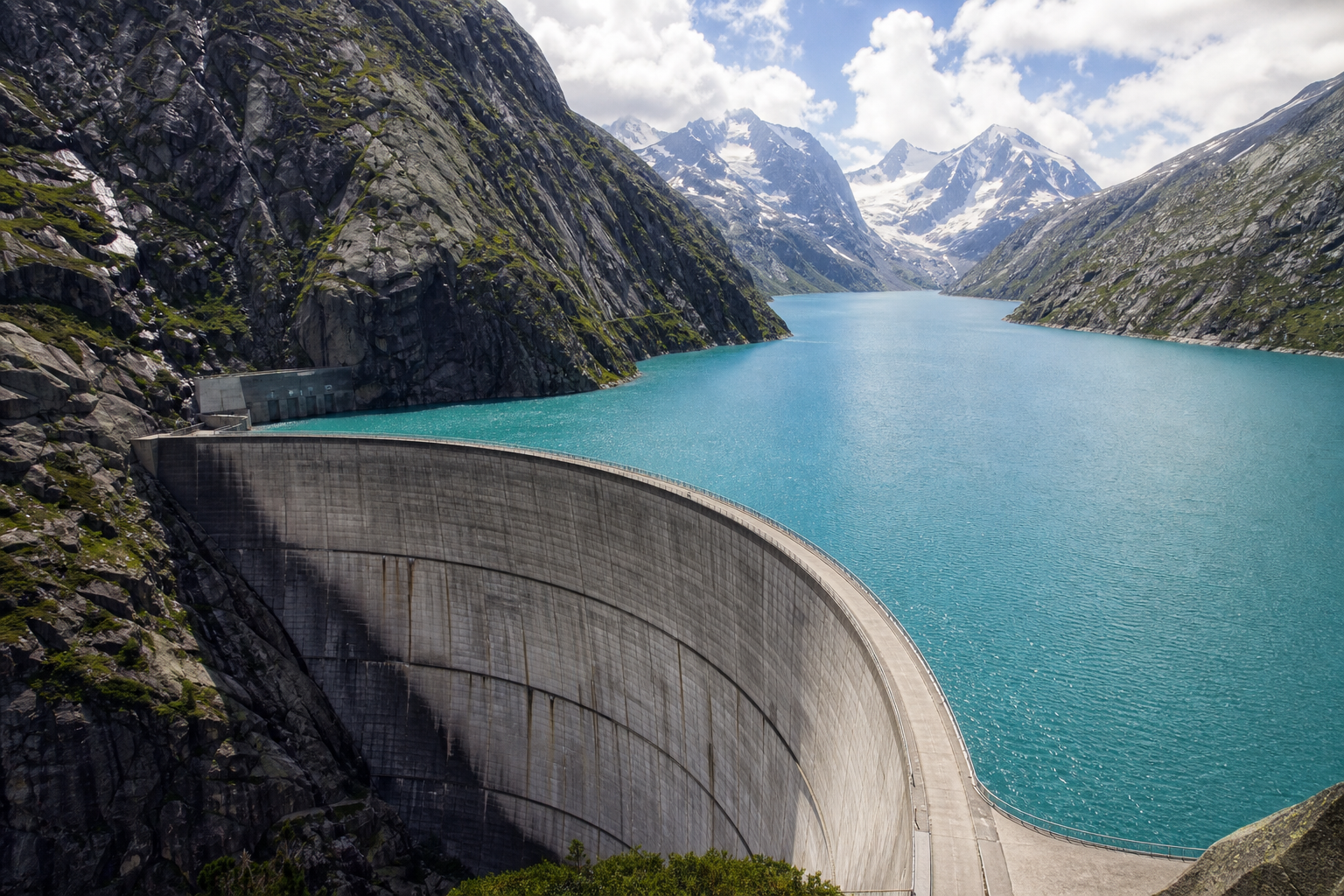
BERN. Alpine storage lakes have recovered to 84 per cent of capacity, the Swiss Federal Office of Energy reported on Wednesday, a rebound of 11 percentage points since the start of August. Late summer storms, which broke the heatwave north of the Alps, refilled catchments that had been running well below the ten year average after the driest summer in decades.
The recovery is uneven. Reservoirs in Valais and the Bernese Oberland, fed by the storms that tracked along the northern flank, now stand at or above their seasonal norms. Lakes in Graubünden and Ticino, which the rain largely missed, remain 8 to 12 points below. The national average of 84 per cent is therefore a northern story wearing a national number.
Utilities treat the figure as a relief, not a resolution. Hydropower supplies most of Switzerland's electricity, but output falls sharply in winter just as demand for heating peaks. The country has imported winter electricity for most of the past two decades, and the Federal Council's emergency package, unveiled last week, is built around the idea that some of this water should be held back for January and February.
Under the draft ordinance, operators of storage lakes could be instructed to keep defined volumes in reserve between December and March, in exchange for compensation on the revenue they would otherwise earn by generating in the autumn. The Energy Ministry estimates the reserved water could deliver about 600 gigawatt hours of additional winter output. Whether that instruction is issued, and at what volume, will be decided against the numbers published this week.
Operators are already positioning. Several of the large Valais utilities have reduced generation in the past ten days, a choice that looks, from the outside, like an anticipation of the reserve framework rather than a response to prices. Industry sources say the calculation is simpler: water stored in August is cheaper than water bought in January, with or without a federal instruction.
The cantons that own most of the storage capacity remain cautious. Valais and Graubünden have long argued that Bern treats alpine valleys as the national battery while their communities bear the environmental costs. They will accept reserve obligations, cantonal governments have signalled, if compensation reflects market prices rather than administrative estimates.
Weather remains the larger variable. A wet September would push the lakes toward 90 per cent, the level at which operators start to spill. A dry one would give the reserve framework its first real test before it is even in force. MeteoSwiss's current outlook leans toward the former, with a confidence it describes as moderate.
Officials in Bern used the recovery to argue that the package they proposed last week is insurance, not panic. “The winter gap is not a scenario. It is a date on the calendar,” a spokesperson for the Energy Ministry said. The ordinance remains on a shortened consultation, with a decision due in November.
What happens in the Alps rarely stays in the Alps. Rivers, reservoirs and power lines carry the consequences to the plateau within days. The 84 per cent figure is, for now, a reason to be less worried than in July. It is not a reason to be unworried. The next measurement, at the end of September, will show whether the storms bought a winter or only a month.